We live in an era of spiritual schizophrenia. On one end of the modern spectrum, we witness the violent resurgence of religious fundamentalism—a rigid, calcified exotericism that views its own historical dogmas not merely as the best way to the Divine, but as the exclusive reality of the Divine. To the fundamentalist, the map is the territory, and all other maps are the work of the devil. On the opposite end of the spectrum lies the saccharine, postmodern synthesis of "New Age" spirituality and relativistic pluralism. This is the realm of the spiritual-but-not-religious, where the profound, demanding architectures of ancient traditions are bulldozed to create a flat, featureless landscape where "all paths lead to the same mountaintop." In this watered-down pluralism, the mountaintop is rendered so generic that the ascent requires no real sacrifice, no rigorous transformation, and ultimately, no truth.
Between the suffocating grip of exclusivism and the dissolving acid of relativism, the modern seeker is left spiritually homeless. Is there a paradigm that honors the absolute, unyielding beauty of specific religious forms while simultaneously acknowledging the universal truth that animates them all?
Enter Frithjof Schuon and his magnum opus, The Transcendent Unity of Religions.
Schuon does not offer a comfortable compromise. He does not suggest that we blend the world’s faiths into a palatable, syncretic soup. Instead, he offers a towering metaphysical framework—the Sophia Perennis or Perennial Wisdom. It is a philosophy of breathtaking verticality, proposing that the unity of religions is not to be found on the horizontal plane of historical facts, moral laws, or theological dogmas. The unity is strictly transcendent. It exists only at the esoteric summit, at the geometric center where the radii of the various orthodox traditions converge upon the Absolute.
To understand Schuon is to undergo a radical epistemological shift. It is to learn how to look through the stained glass of religious dogma to see the pure, uncolored light of the Divine Intellect that illuminates it from behind.
The Cartographer of the Invisible: Origins of the Perennialist School
To contextualize Schuon’s monumental thesis, we must first look to the soil from which it sprang: the Traditionalist School of the early 20th century. While the Enlightenment had promised a utopia of rationalism and material progress, the mechanized slaughter of the First and Second World Wars shattered the myth of inevitable human ascent. In the wake of this civilizational trauma, a small, elite cadre of thinkers began to suggest that the modern world was not at the apex of history, but rather in a state of severe spiritual decay—the Kali Yuga, or the Dark Age.
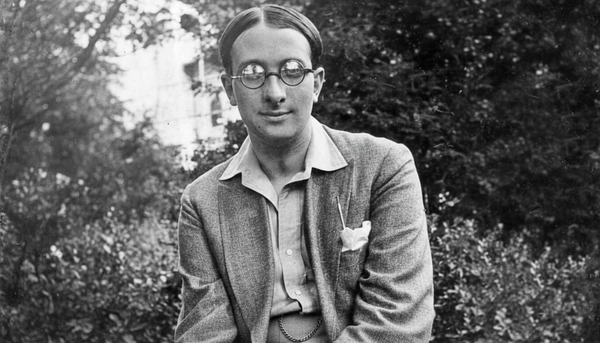
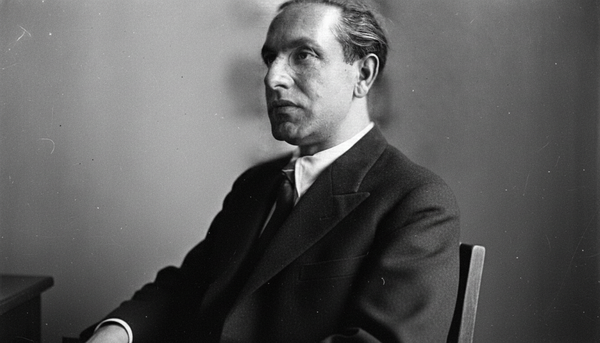
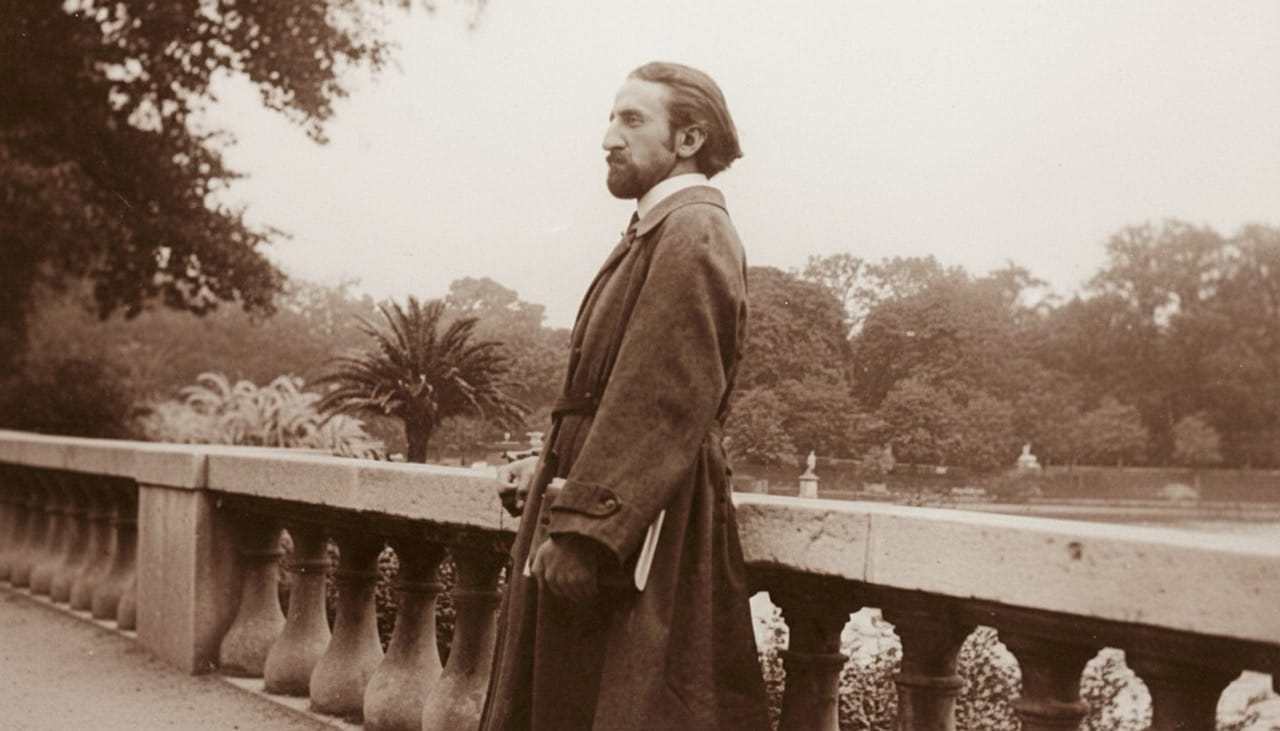
The intellectual godfather of this movement was the French metaphysician René Guénon. Guénon systematically dismantled the premises of modernity, arguing that the West had severed itself from the primordial, transcendent truths that had governed all traditional civilizations. Following Guénon was the brilliant Ceylonese art historian Ananda Coomaraswamy, who demonstrated that the traditional arts of the East and medieval West were not mere aesthetic expressions, but precise, mathematical symbols of metaphysical realities.
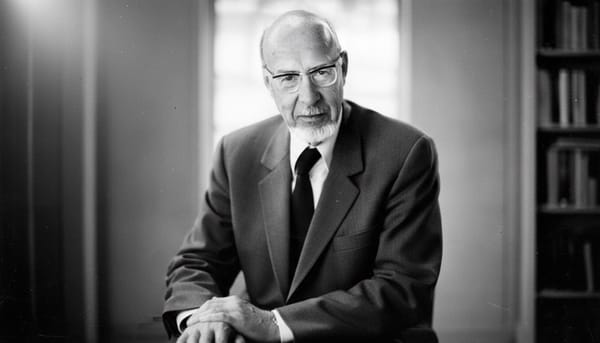
But it was Frithjof Schuon (1907–1998), an esotericist, poet, and painter of Swiss-German descent, who brought the Traditionalist perspective to its most refined, spiritually operative climax. If Guénon was the severe architect who drafted the blueprints of the Perennial Philosophy, Schuon was the mystic who painted its inner life.
In 1948, Schuon published De l'Unité transcendante des religions (The Transcendent Unity of Religions). The book arrived like a lightning bolt in theological circles. Even T.S. Eliot, the towering poet and staunch Anglo-Catholic, was moved to write of it: "I have met with no more impressive work in the comparative study of Oriental and Occidental religion."
Schuon’s work emerged not from mere academic curiosity, but from profound, direct realization. He traveled extensively, living among the Bedouins of North Africa, receiving initiation into Sufi orders, and later spending time with the Plains Indians of North America, whose primal, sacred relationship to nature he deeply revered. For Schuon, the study of religion was never a secular, anthropological exercise; it was the highest science of the soul.
Yet, Schuon’s proposition is dangerous to the uninitiated. It demands that we confront the terrifying relativity of our most cherished beliefs, not to destroy them, but to anchor them in something infinitely deeper. To cross the threshold into Schuon’s esoteric framework is to leave behind the comforting illusions of surface-level reality.
Continue reading this briefing
You've reached the members-only portion of this 17 min read essay. Become a PhiloCrux member to finish it — and unlock the full archive of 28+ deep-dive masterclass and private audio briefing.
Already a member? Sign in