The Twilight of the Gods and the Exhaustion of the Present
We are living at the terminal edge of a grand, exhausting experiment. Modernity—with its relentless drumbeat of technological progress, egalitarianism, and hyper-rationality—promised to emancipate humanity from the superstitions of the past. It promised a utopia built on the bedrock of science, commerce, and universal rights. Yet, as we stand amidst the gleaming glass towers and algorithmic architectures of the twenty-first century, a profound, undeniable spiritual starvation haunts the Western soul. We have conquered the material world, only to find ourselves exiled in a landscape devoid of transcendent meaning.
In this era of fluorescent-lit cubicles, manufactured outrage, and the endless commodification of human attention, the creeping suspicion arises: What if progress is an illusion? What if we have not ascended from the dark, but rather descended into it?
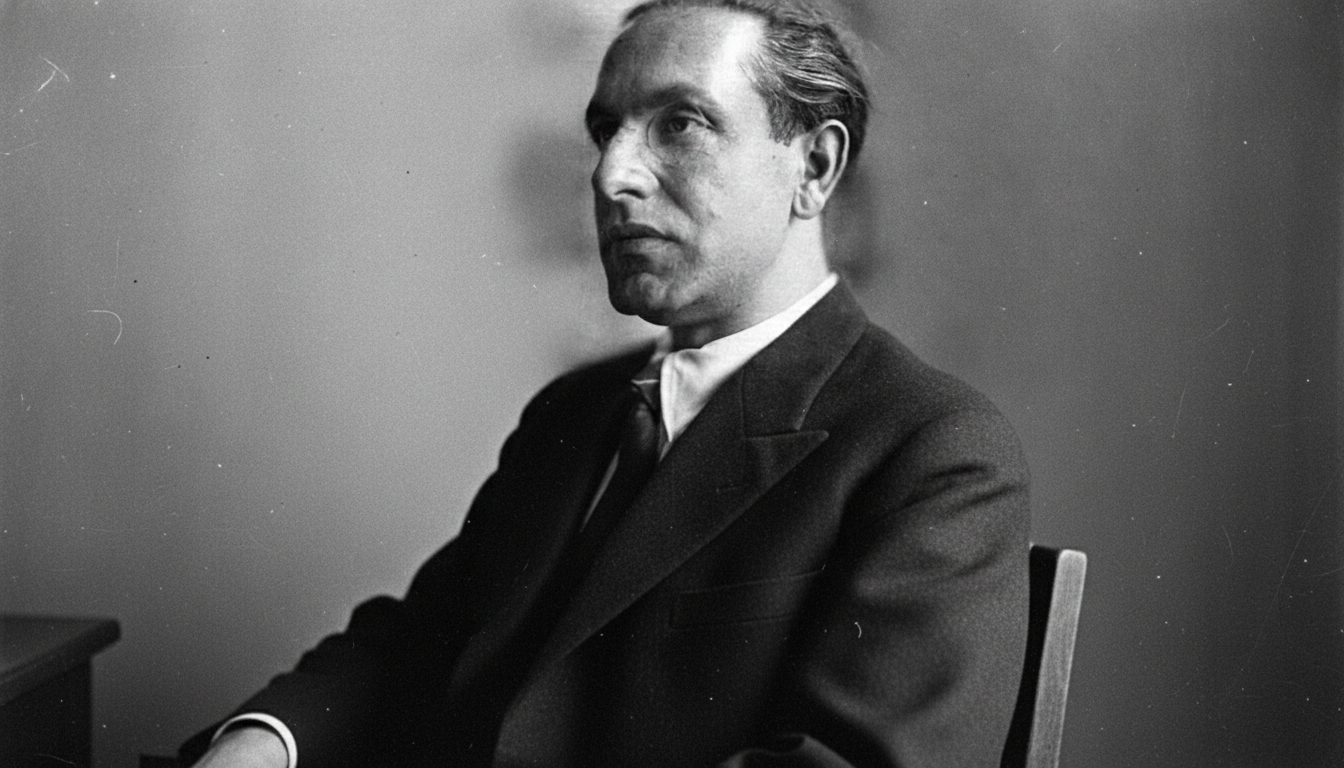
To ask such questions is to step into the radical, uncompromising, and deeply controversial world of Baron Giulio Cesare Andrea Evola. Known as Julius Evola, he remains one of the most polarizing intellectual figures of the twentieth century. His magnum opus, Revolt Against the Modern World (1934), is not merely a critique of contemporary politics or economics; it is a sweeping, metaphysical indictment of the entire modern epoch. Evola did not seek to reform modernity; he sought to expose it as an ontological anomaly, a catastrophic deviation from the eternal, sacred order that once governed human existence.
To read Evola is to swallow a jagged pill. He is unapologetically elitist, anti-democratic, and deeply reactionary. Yet, for all his historical controversies, his diagnosis of the modern condition strikes a chord that resonates with terrifying clarity today. For the modern intellectual seeking to understand the roots of our contemporary meaning crisis, Evola’s work is an unavoidable, towering monolith.
This essay will undertake a rigorous dialectical analysis of Evola’s foundational philosophy. We will explore his thesis of the Sacred Order, confront the glaring antithesis of his historical and political failures, and ultimately synthesize a framework for how the modern patrician might navigate the ruins of the present age.
The Baron of the Ruins: Origins of a Radical Traditionalist
To understand the sheer magnitude of Evola’s revolt, one must understand the crucible in which his mind was forged. Born in Rome in 1898 to an aristocratic Sicilian family, Evola came of age during the cataclysm of the First World War. He served as an artillery officer, witnessing firsthand the industrialized slaughter that shattered the optimistic illusions of the Belle Époque. The war proved to him that the Enlightenment project had culminated not in reason, but in mechanized butchery.
Returning to a fractured Italy, Evola plunged into the avant-garde. He became a prominent Dadaist painter and poet, using the absurdity of the movement to mock the bourgeois values he despised. But mere artistic rebellion soon proved insufficient. Driven by an insatiable thirst for the absolute, he abandoned art and immersed himself in the study of Eastern metaphysics, Western hermeticism, alchemy, and esoteric philosophy.
It was during this period that Evola encountered the works of René Guénon, the French philosopher who codified the school of thought known as Traditionalism. Guénon posited that all major world religions share a single, primordial, transcendent truth—the Philosophia Perennis—and that the modern West is the first civilization in history to completely sever itself from this spiritual anchor.
Evola took Guénon’s premise and injected it with a distinctly martial, Kshatriya (warrior) spirit. While Guénon advocated for a quiet, contemplative withdrawal from the modern world, Evola demanded a fierce, active, and aristocratic resistance. In 1934, he published Revolt Against the Modern World, a book that served as both a historical autopsy of human decline and a metaphysical blueprint for what he termed the "World of Tradition."
Continue reading this briefing
You've reached the members-only portion of this 16 min read essay. Become a PhiloCrux member to finish it — and unlock the full archive of 25+ deep-dive masterclass and private audio briefing.
Already a member? Sign in