We live in an era asphyxiated by the mandate of happiness. Modernity has weaponized optimism, transforming it from a psychological disposition into a moral obligation and a lucrative consumer commodity. We are incessantly instructed to manifest our desires, to curate our joy, and to view suffering as a mere glitch in the otherwise flawless software of human progress. But what happens when the software itself is fundamentally designed to break us? What happens when we strip away the anesthetic of toxic positivity and stare nakedly into the infinite, indifferent void?
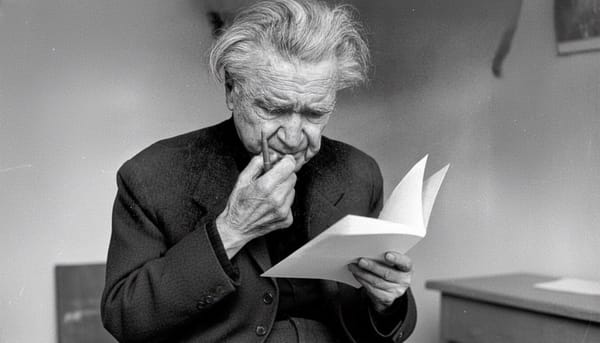
To answer this, we must turn to a fragile, hunchbacked nineteenth-century aristocrat who penned his thoughts from a suffocating provincial library in Italy. Giacomo Leopardi (1798–1837) is arguably the most profound poet-philosopher of the modern era—a thinker whose radical pessimism makes Arthur Schopenhauer read like a tentative moderate, and whose existential lucidity prefigured Friedrich Nietzsche, Albert Camus, and the entire theater of the absurd by a century.
Through his monumental, 4,500-page intellectual diary, the Zibaldone di pensieri, and his darkly satirical Operette Morali (Moral Tales), Leopardi dismantled the grand illusions of the Enlightenment and the spiritual consolations of Romanticism. He exposed a terrifying truth: Nature is not a nurturing mother, but a cruel, indifferent stepmother (la natura matrigna). Human happiness is not a right, nor even a possibility; it is a neurological and philosophical illusion.
Yet, to read Leopardi is not to drown in depressive nihilism. Paradoxically, his articulation of cosmic despair is one of the most intellectually liberating and aesthetically triumphant achievements in Western literature. By mapping the exact dimensions of our existential prison, Leopardi offers us the only authentic form of freedom available to the condemned.
The Boy in the Library: A Genealogy of Despair
To understand the architecture of Leopardi’s thought, one must first understand the claustrophobia of his origins. Born in 1798 in Recanati, a culturally stagnant town in the Papal States—which he bitterly referred to as a borgo selvaggio (savage village)—Leopardi was the eldest son of Count Monaldo, a reactionary nobleman whose vast library was both Giacomo’s sanctuary and his tomb.
Driven by a ferocious, insatiable intellect and neglected by a coldly pious mother, the young Leopardi embarked on what he famously called his studio matto e disperatissimo (mad and desperate study). Between the ages of eleven and nineteen, he taught himself Latin, Greek, Hebrew, modern languages, philology, and astronomy. He devoured the ancients and the Enlightenment philosophes alike. But this intellectual gluttony exacted a devastating physical toll. His spine curved, his eyesight failed, and he developed a lifelong frailty that left him physically grotesque in the eyes of the society he so desperately wished to engage.
It was within this crucible of physical suffering and intellectual isolation that his philosophy began to crystallize. Leopardi watched as Europe was swept by the optimism of the Industrial Revolution, the Hegelian march of history, and the sentimentalism of the Romantics. He rejected them all. He realized that the accumulation of knowledge did not equate to the accumulation of happiness. On the contrary, reason was a destructive solvent. The more humanity learned about the mechanical, indifferent laws of the universe, the more it destroyed the "sweet illusions" that made life bearable for the ancients.
Leopardi’s despair was not merely the psychological byproduct of a sickly man; it was a rigorous, universally applicable epistemological system. He meticulously documented this system in the Zibaldone, a secret laboratory of thought where he analyzed human nature, linguistics, memory, and the mechanics of suffering with terrifying precision.
Continue reading this briefing
You've reached the members-only portion of this 15 min read essay. Become a PhiloCrux member to finish it — and unlock the full archive of 28+ deep-dive masterclass and private audio briefing.
Already a member? Sign in