Look around your living room. Look at the screens that illuminate your evenings, the devices that hum in your pockets, the omnipresent glow that serves as the backdrop to modern existence. We have been conditioned to view this digital ecosystem as a benign landscape of leisure—a boundless playground of entertainment, information, and connectivity. We believe we are the masters of the remote control, the sovereign curators of our algorithmic feeds.
But what if this entire paradigm is a carefully constructed lie? What if the culture we consume is not a reflection of our desires, but the very instrument used to manufacture them?
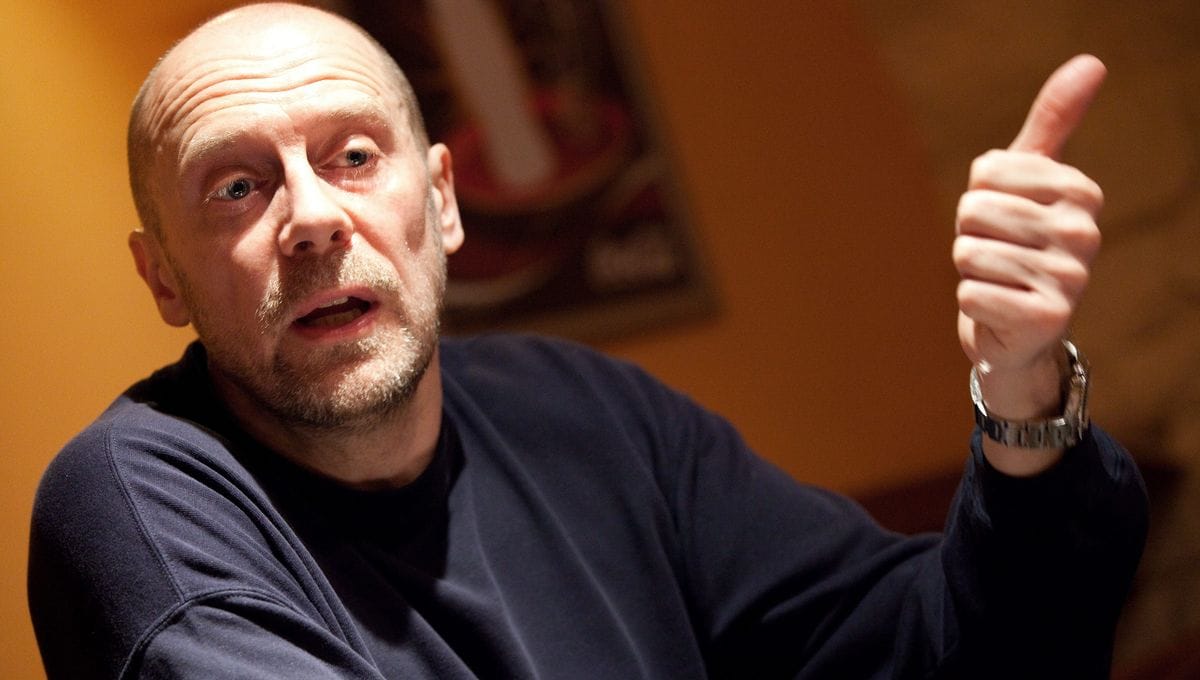
In a profound and deeply unsettling analysis, the controversial French essayist and social critic Alain Soral dismantles the architecture of modern culture. He exposes it not as a democratized space for artistic expression or innocent entertainment, but as a high-precision machine for social engineering. Soral’s central, brutal thesis is that the entire media apparatus—from the prestige dramas of television to the blockbuster spectacles of cinema—is engineered with a singular, totalitarian purpose: to systematically reduce citizen consciousness to consumer desire.
We are not being entertained; we are being processed.
To understand the modern world, one must understand the invisible mechanics of what Soral terms our "Market Democracy." This is a paradigm where the illusion of political choice masks the reality of total financial control over the press, a system designed to transform active, critical citizens into a horde of docile, predictable, and self-absorbed consumers. Soral’s critique cuts through the comforting illusions of modern liberalism, offering a forensic deconstruction of how our minds are managed, our rebellions co-opted, and our realities curated by a financial oligarchy.
From the Agora to the Megamall: The Genesis of the Managed Reality
To fully grasp the weight of Soral’s analysis, we must situate it within the broader historical continuum of cultural critique. The anxiety over mass media is not new. In the mid-20th century, theorists of the Frankfurt School, such as Theodor Adorno and Max Horkheimer, warned of the "Culture Industry"—a system that churned out standardized cultural goods to pacify the working classes. Later, the French Situationist Guy Debord diagnosed the "Society of the Spectacle," where authentic human life had been replaced by its representation, and relationships were mediated entirely by images.
Soral builds upon these foundational critiques but updates them for the hyper-financialized, neoliberal era. Where earlier theorists saw a system that was perhaps clumsy or merely profit-driven, Soral identifies a malicious, calculated refinement. The transition from the post-war era to the 21st century marked a shift from broadcasting as a means of national cohesion to broadcasting as a weapon of mass psychological subjugation.
In the early days of television, there remained a lingering, albeit paternalistic, ideal of public edification. The state or the broadcasters felt a nominal duty to elevate the public discourse. However, as financial groups consolidated control over global media conglomerates, this civic duty was entirely liquidated. The "agora"—the public square of democratic debate—was quietly bulldozed and replaced by the digital megamall.
In this new environment, the citizen is an obstacle. A citizen asks questions, demands rights, and critiques power. A consumer, however, only feels lack. A consumer is driven by manufactured anxieties and engineered appetites. The genius of the system Soral describes is that it does not use force to suppress the citizen; it uses pleasure, distraction, and subtle psychological conditioning to ensure the citizen simply forgets they ever had the capacity for critical thought.
Continue reading this briefing
You've reached the members-only portion of this 16 min read essay. Become a PhiloCrux member to finish it — and unlock the full archive of 29+ deep-dive masterclass and private audio briefing.
Already a member? Sign in