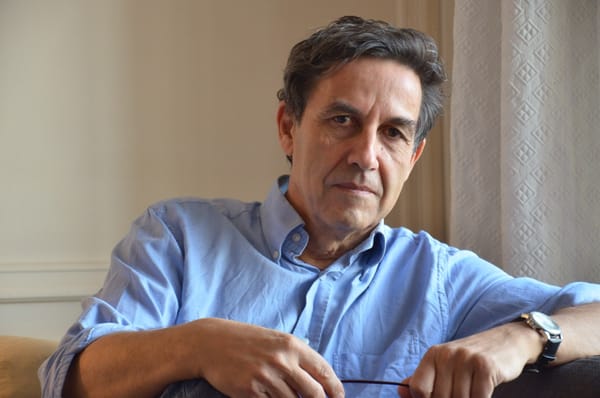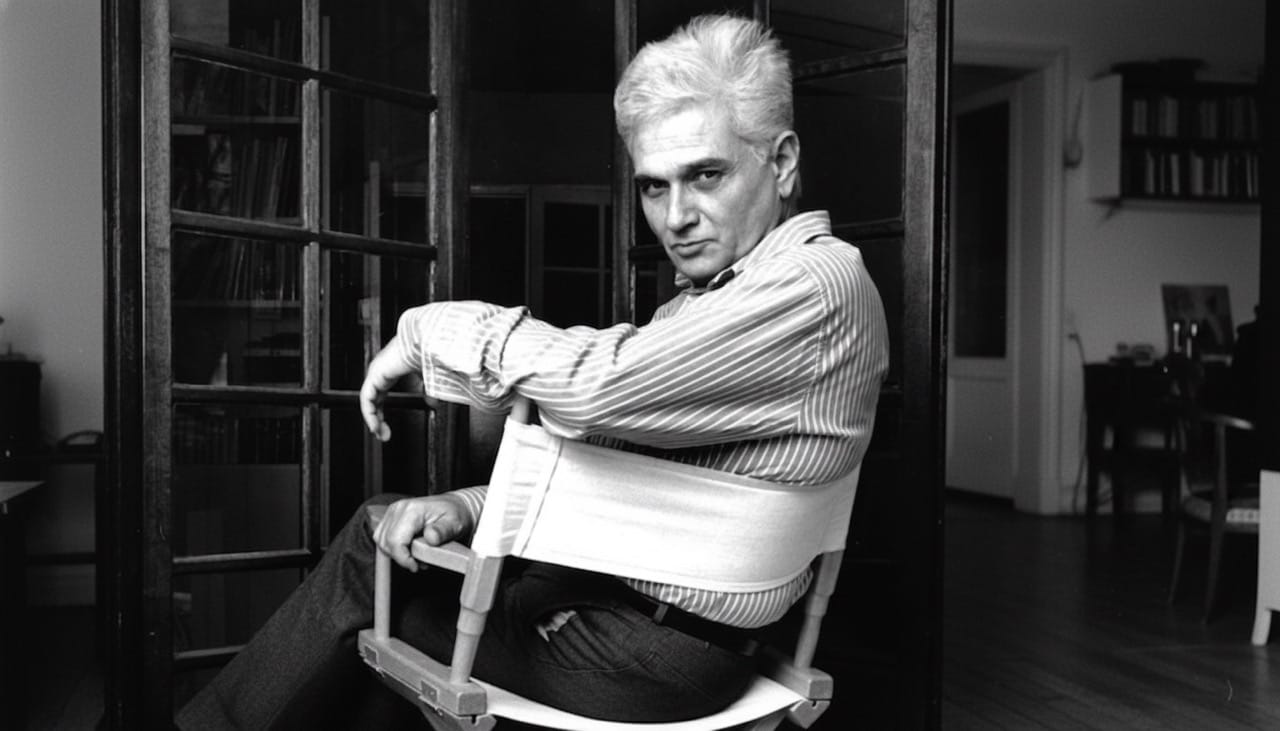
In the spring of 1992, the University of Cambridge was plunged into an unprecedented academic civil war. The university had proposed awarding an honorary doctorate to a French philosopher, a gesture that typically passes with polite applause and clinking sherry glasses. Instead, nineteen prominent philosophers—including W.V. Quine and David Armstrong—drafted a furious open letter to The Times of London, demanding the honor be revoked. They accused the nominee of "absurdities," "tricks," and "gimmicks," claiming his work did not meet acceptable standards of clarity and rigor. They argued that his entire intellectual project was not philosophy at all, but a dangerous, corrosive attack on reason itself.
The man at the center of this firestorm was Jacques Derrida. And the origin of their terror could be traced back exactly twenty-five years, to a single, explosive bombshell dropped in 1967: Of Grammatology.
Why did a dense, labyrinthine book about the nature of language provoke such visceral hatred from the intellectual establishment? Because Derrida did not merely disagree with his predecessors; he dismantled the very ground upon which Western thought had stood for two and a half millennia. From Plato to Descartes, from Kant to Heidegger, Western philosophy had been built on a hidden, unquestioned foundation: the belief in "presence"—the idea that there is a stable, unmediated truth, a pure origin, a direct access to reality that exists outside of language.
Derrida called this logocentrism. And with surgical, terrifying precision, he set out to prove that it was a delusion.
In Of Grammatology, Derrida argued that our desperate search for a stable, ultimate meaning—the "Transcendental Signified," whether we call it God, Truth, Reason, or Being—is an illusion sustained by the repression of writing. He proposed that there is no final anchor to reality, no moment where language perfectly touches the world. There is only a vast, endless web of signs pointing to other signs. There is only the infinite deferral of meaning.
For his critics, this was the end of truth. It was intellectual nihilism. But for those who dared to read him closely, deconstruction was not the murder of meaning—it was its liberation.
The Architect of the Abyss: 1967 and the Fall of Logocentrism
To understand the seismic impact of Of Grammatology, we must return to the intellectual climate of Paris in the 1960s. The dominant paradigm of the era was Structuralism, heavily influenced by the Swiss linguist Ferdinand de Saussure. Saussure had revolutionized linguistics by proposing that language is a system of signs, and that a sign consists of two parts: the signifier (the sound-image or written word, like the letters d-o-g) and the signified (the concept of a dog).
Crucially, Saussure argued that the relationship between the signifier and the signified is arbitrary. There is no natural reason why the sound "dog" should represent a four-legged canine. Meaning, therefore, does not arise from a word's magical connection to the real world, but from its difference from other words. "Dog" means dog only because it is not "log," "bog," or "cat." Meaning is purely relational.
Derrida looked at Saussure’s brilliant architecture and noticed a fatal flaw—a ghost haunting the structuralist machine.
While Saussure claimed that meaning was differential, he still privileged the spoken word over the written word. This bias, Derrida realized, was not unique to Saussure. It was the defining neurosis of Western philosophy. Derrida named this phonocentrism: the historical elevation of speech as the authentic, pure vehicle of truth, and the demotion of writing as a dead, parasitic, and dangerous derivative.
Think of Plato’s Phaedrus, where writing is condemned as an invention that will destroy human memory and offer only the illusion of wisdom. Think of Jean-Jacques Rousseau, who viewed speech as the natural, passionate expression of the human soul, and writing as a cold, artificial disease of civilization.
Why this historical hatred of writing? Because, Derrida observed, speech implies presence. When I speak to you, I am physically here. My breath, my voice, my intention seem to be immediately present behind my words. Speech gives us the comforting illusion that meaning is transparent and directly tied to the soul of the speaker.
Writing, however, operates in the absence of the author. Once a text is written, it is severed from its creator. It can be read by anyone, anywhere, out of context. It can be misunderstood, twisted, and reinterpreted. Writing reveals the terrifying truth that language functions perfectly well without the presence of an author, without a guaranteed intention, and without a stable origin.
In 1967, Derrida published three monumental books simultaneously: Speech and Phenomena, Writing and Difference, and Of Grammatology. Together, they executed a breathtaking philosophical coup. Derrida did not merely say that writing was equal to speech. He argued that speech is already a form of writing.
All language, even spoken language, is characterized by the very things we fear in writing: absence, distance, and the potential for misunderstanding. There is no pure, unmediated access to truth. The "presence" we feel in speech is an illusion. We are always already inside the matrix of signs.
Continue reading this briefing
You've reached the members-only portion of this 17 min read essay. Become a PhiloCrux member to finish it — and unlock the full archive of 26+ deep-dive masterclass and private audio briefing.
Already a member? Sign in