On March 2, 1757, Robert-François Damiens, a man who had attempted to assassinate King Louis XV of France, was subjected to a public execution of almost unimaginable brutality. He was led to the Place de Grève in Paris, where his flesh was torn with red-hot pincers. Boiling oil, molten lead, and burning sulfur were poured into his wounds. Finally, he was attached to four horses and quartered, his limbs torn from his torso, before his remains were reduced to ashes. It was a visceral, horrifying, and profoundly public display of sovereign power.
Eighty years later, in 1837, Léon Faucher drew up the rules for the House of Young Prisoners in Paris. The rules dictated a day segmented into precise, sterile intervals: Art. 17. The prisoners’ day will begin at six in the morning in winter and at five in summer... Art. 18. At the first drum-roll, the prisoners must rise and dress in silence... Art. 20. Work will last for nine hours a day.
Between these two moments lies one of the most profound epistemic ruptures in human history.
How did Western civilization transition from the gruesome, theatrical spectacle of physical torture to the quiet, bureaucratic, and meticulously scheduled routine of the penitentiary? The traditional, self-congratulatory narrative of the Enlightenment tells us that this shift was born of humanitarian progress. We became more civilized, more empathetic, and more rational. We realized that torturing the body was barbaric, and so we decided to cure the soul.
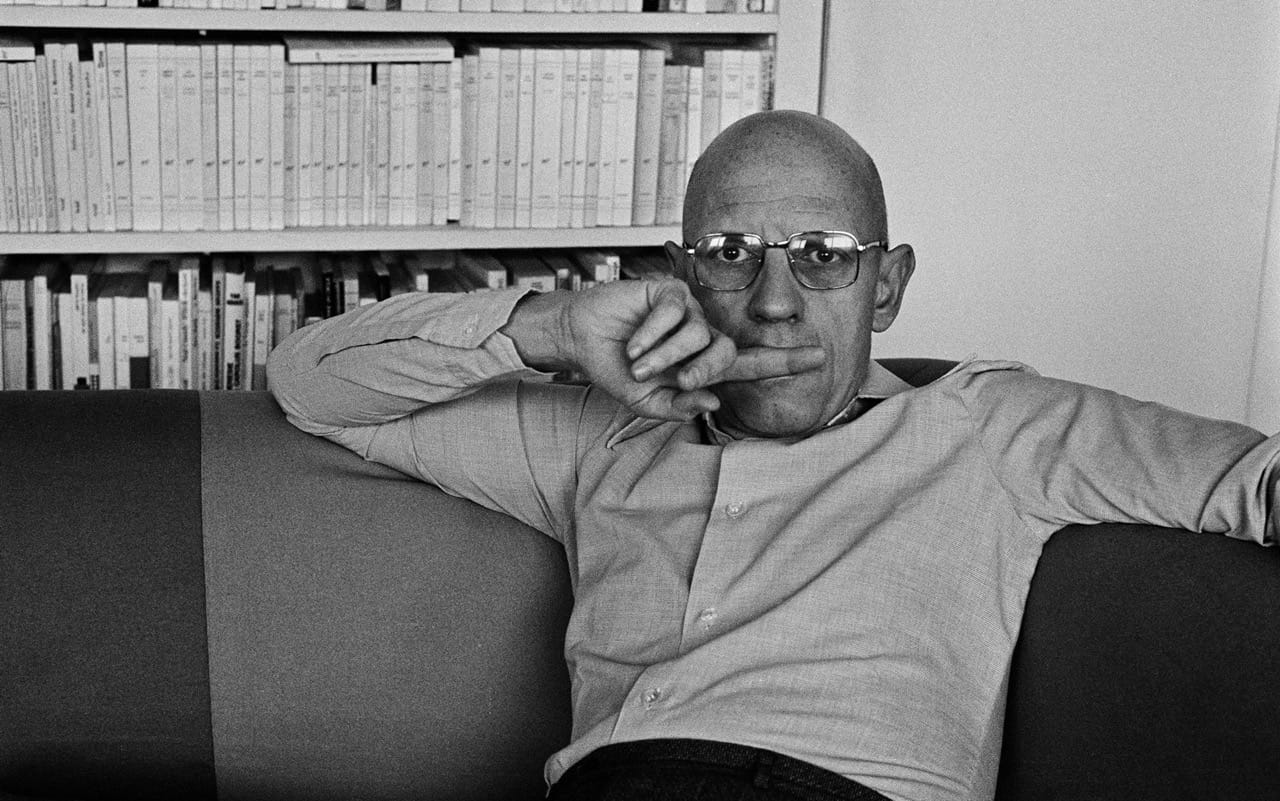
Michel Foucault, the towering and controversial French philosopher, looked at this narrative and saw a comforting illusion. In his 1975 masterwork, Discipline and Punish: The Birth of the Prison (Surveiller et punir: Naissance de la prison), Foucault posited a chilling alternative: the shift in penal practice was not about punishing less, but about punishing better. It was the dawn of a new, insidious technology of power—one that did not seek to destroy the body, but to meticulously mold it, observe it, and render it utterly docile.
Welcome to the birth of the carceral society.
The Genealogist of Power: Contextualizing Foucault's Masterpiece
To understand Discipline and Punish, we must first understand the intellectual battleground of the 1970s. Following the student uprisings of May 1968 in France, traditional Marxist paradigms—which viewed power strictly through the lens of class struggle, economics, and state apparatuses—began to feel insufficient. The state was not just oppressing the worker in the factory; power was operating in the psychiatric ward, the university classroom, the military barracks, and the prison cell.
Foucault, who had already dismantled the history of madness and clinical medicine, turned his piercing gaze to the penal system. His interest was not merely academic. In 1971, alongside Daniel Defert and Jean-Marie Domenach, Foucault founded the Groupe d'Information sur les Prisons (GIP). The GIP smuggled questionnaires into French prisons to allow inmates to speak for themselves about the deplorable, overcrowded conditions they faced. Foucault was intimately aware of the physical and psychological realities of the modern dungeon.
However, Foucault’s genius lay in his methodological approach: genealogy. Borrowing from Friedrich Nietzsche, Foucault did not seek to write a linear, progressive history. Instead, he sought to trace the complex, often accidental, and deeply intertwined lineages of ideas and institutions. He aimed to uncover the "micro-physics of power"—the myriad, capillary ways in which power operates at the ground level, moving through institutions, discourses, and the very bodies of individuals.
In Discipline and Punish, Foucault argues that the Enlightenment did not liberate man; it merely invented a new, more efficient cage. The reformers of the 18th and 19th centuries—figures like Cesare Beccaria and Jeremy Bentham—were not primarily motivated by empathy. They were engineers of a new social order, seeking to replace the erratic, passionate, and inefficient power of the Sovereign with a continuous, calculated, and pervasive machinery of control.
Continue reading this briefing
You've reached the members-only portion of this 16 min read essay. Become a PhiloCrux member to finish it — and unlock the full archive of 29+ deep-dive masterclass and private audio briefing.
Already a member? Sign in