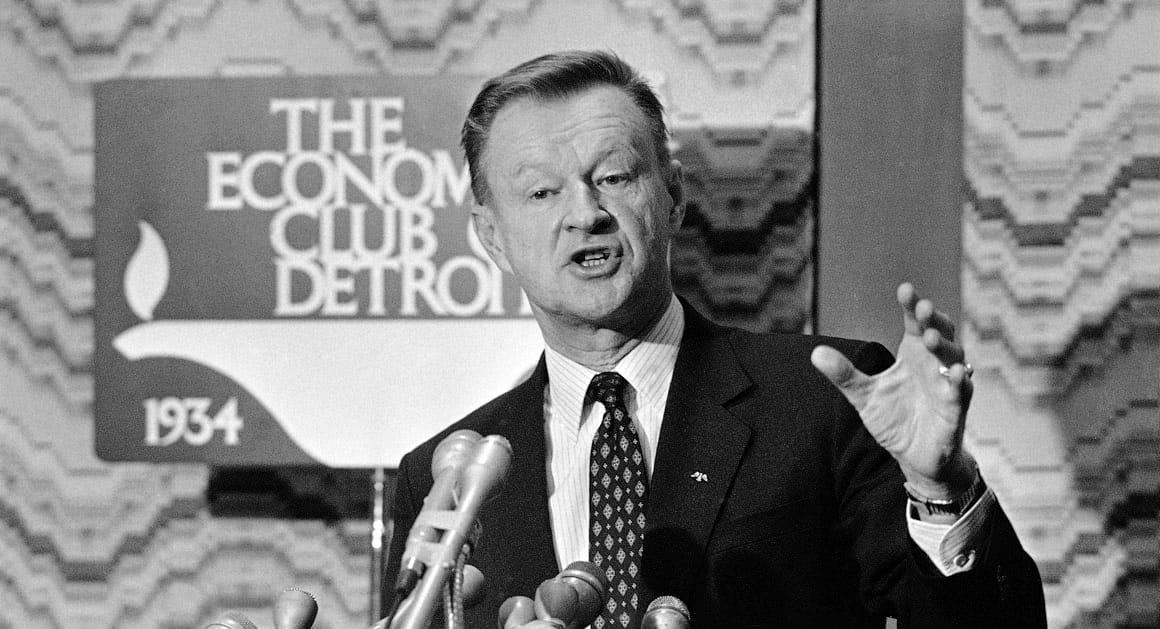
Behind the seemingly chaotic unfolding of global events lies a calculated, high-stakes game of strategy. For decades, international relations have been shaped not just by circumstance, but by the deliberate maneuvers of geopolitical architects. Among the most influential—and controversial—of these strategists is Zbigniew Brzezinski. As a former United States National Security Advisor, Brzezinski possessed an unparalleled understanding of global power dynamics, which he famously distilled into his seminal work, The Grand Chessboard.
To understand the modern world order, one must first understand the board on which it is played. Brzezinski did not view nations as isolated entities; rather, he saw them as deeply interconnected pieces whose movements dictate the rise and fall of empires.
The Eurasian Heartland
At the core of Brzezinski’s thesis is the paramount importance of Eurasia. Stretching from the shores of Western Europe to the eastern edges of China, Eurasia contains the lion’s share of the world’s population, natural resources, and economic activity. Brzezinski argued that whoever controls this massive supercontinent inherently controls the world.
He identified the "Eurasian Heartland" as the ultimate prize in global geopolitics. In his view, the fundamental objective of any dominant superpower is to prevent the emergence of a coalition capable of challenging its supremacy in this region. This perspective dramatically reframes how we view historical conflicts, shifting the focus from ideological battles to calculated territorial chess moves designed to secure influence over critical geopolitical pivot points.
America as the Ultimate Arbiter
Following the collapse of the Soviet Union, the United States found itself in an unprecedented position as the world's sole superpower. Brzezinski’s writings explore how America must act as the ultimate arbiter of global power to maintain this unipolar status. However, his vision of American primacy is not rooted in passive observation; it demands active, strategic engagement.
He suggested that the United States must delicately balance alliances, manipulate rivalries, and strategically position its influence to prevent any single Eurasian state from accumulating enough power to expel American interests. This requires a ruthless pragmatism, treating sovereign nations as vital squares on a grand chessboard where every diplomatic and military action serves a broader strategy of hegemony.
Visionary or Warmonger?
The strategies outlined in The Grand Chessboard have sparked intense debate among historians, political scientists, and the public. To his supporters, Brzezinski was a brilliant visionary who provided a necessary, clear-eyed framework for maintaining global stability in a complex world. They argue that his pragmatic approach prevents power vacuums that could lead to catastrophic global conflicts.
To his critics, however, Brzezinski’s philosophy borders on warmongering. Detractors point out that viewing the world purely through the lens of dominance and control strips international relations of their humanity, leading to endless proxy wars, destabilized regions, and systemic inequality. By reducing nations to mere pieces to be sacrificed or advanced, this worldview risks fostering the very global instability it claims to prevent.
Implications for the Future of Global Power
As new global superpowers rise and alliances shift, Brzezinski’s theories remain as relevant today as they were upon publication. The ongoing tensions in Eastern Europe and the rapid economic expansion of Asian powers are not isolated incidents; they are the modern manifestations of the exact geopolitical struggle Brzezinski predicted. Understanding the mechanics of the grand chessboard is essential for deciphering the future of international relations, the nature of modern conflict, and the delicate balance of world peace.
Ready to uncover the hidden strategies of global dominance and explore Brzezinski's master plan?
Join "PhiloCrux" community.
Unlock high-density masterclasses and investigations into ideas surviving outside the algorithmic consensus. Support independent thought and get full access to our digital library.
Join Now