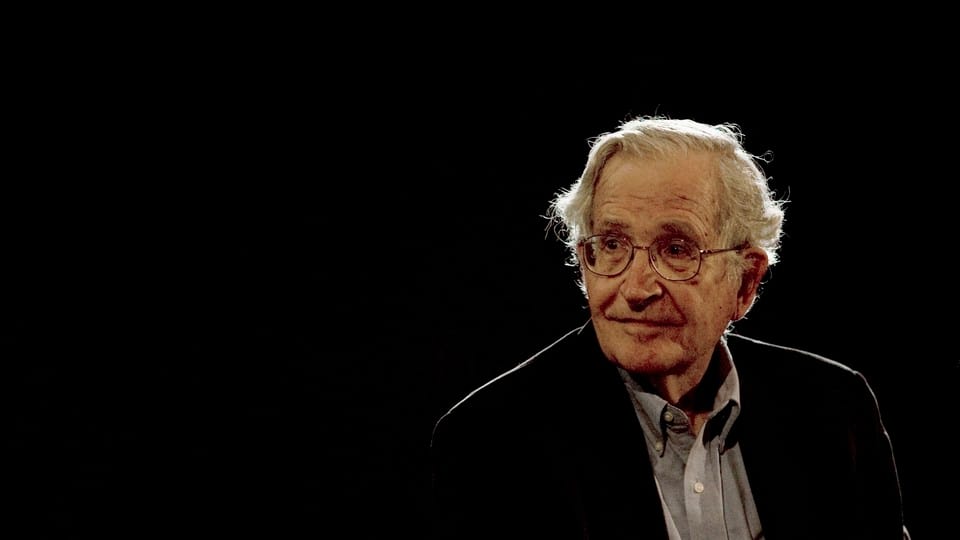
History is shaped by those who hold power, but it is often redefined by those brave enough to question it. For decades, the relationship between authority, truth, and public intellectualism has been a battleground of complex ideas. At the center of this modern ideological storm stands Noam Chomsky. A towering figure in linguistics and philosophy, Chomsky has spent a lifetime arguing a singular, provocative point: possessing knowledge is not a passive state. It comes with a profound moral obligation to dismantle lies and challenge the structures of systemic power.
The Moral Weight of Knowledge
Traditional academia often prizes neutrality, framing the intellectual as a detached, objective observer of the human condition. Chomsky shatters this paradigm entirely. He posits that those with the privilege of education, time, and access to public platforms have a distinct and unavoidable duty to expose injustice.
In his view, remaining silent in the face of oppression is not a sign of neutrality; it is an act of complicity. This philosophy radically reframes the role of the thinker. It shifts the academic from a mere recorder of historical events to an active participant in the aggressive pursuit of justice, demanding that knowledge be used as a tool to protect the vulnerable rather than a shield to hide behind.
The Line Between Observation and Activism
But what does it truly mean to speak truth to power? Engaging in activism requires much more than simply identifying societal and systemic flaws. It demands a willingness to endure the intense friction that comes with dissenting against the established status quo.
For Chomsky, this meant turning a fiercely critical eye toward the very institutions, governments, and economic systems that dictate modern life. It forces us to ask a difficult question about the nature of intellect: is the honest pursuit of truth inherently an act of rebellion? To fully grasp the profound complexities of Chomsky's approach to dissent—and to examine whether his actions always aligned with his ideals—we must look closely at how his philosophy translates into real-world action.
Selective Outrage or Singular Focus?
A lifelong commitment to radical activism is rarely without deep controversy. When a thinker dedicates their life to unearthing the abuses of specific power structures—particularly Western hegemony and American foreign policy—questions naturally arise about the broader scope of their critique.
Does an intense, laser-like focus on one dominant power create a blind spot for the transgressions of others? The line between being a tireless, uncompromising champion of universal truth and displaying selective outrage is fiercely debated among both his most ardent supporters and his harshest critics.
The Lasting Impact of Relentless Dissent
Ultimately, the conversation surrounding Chomsky's legacy extends far beyond the man himself. His work acts as a mirror for modern society, challenging us to critically evaluate how we consume information, how we view authority, and whether we are doing enough to hold our own institutions accountable. Whether viewed as a guiding moral compass for the modern age or a polarizing provocateur, his relentless demand for systemic accountability remains a vital cornerstone of contemporary philosophical debate.
Ready to uncover the hidden mechanisms of power and explore the true moral cost of staying silent?
Join "PhiloCrux" community.
Unlock high-density masterclasses and investigations into ideas surviving outside the algorithmic consensus. Support independent thought and get full access to our digital library.
Join Now