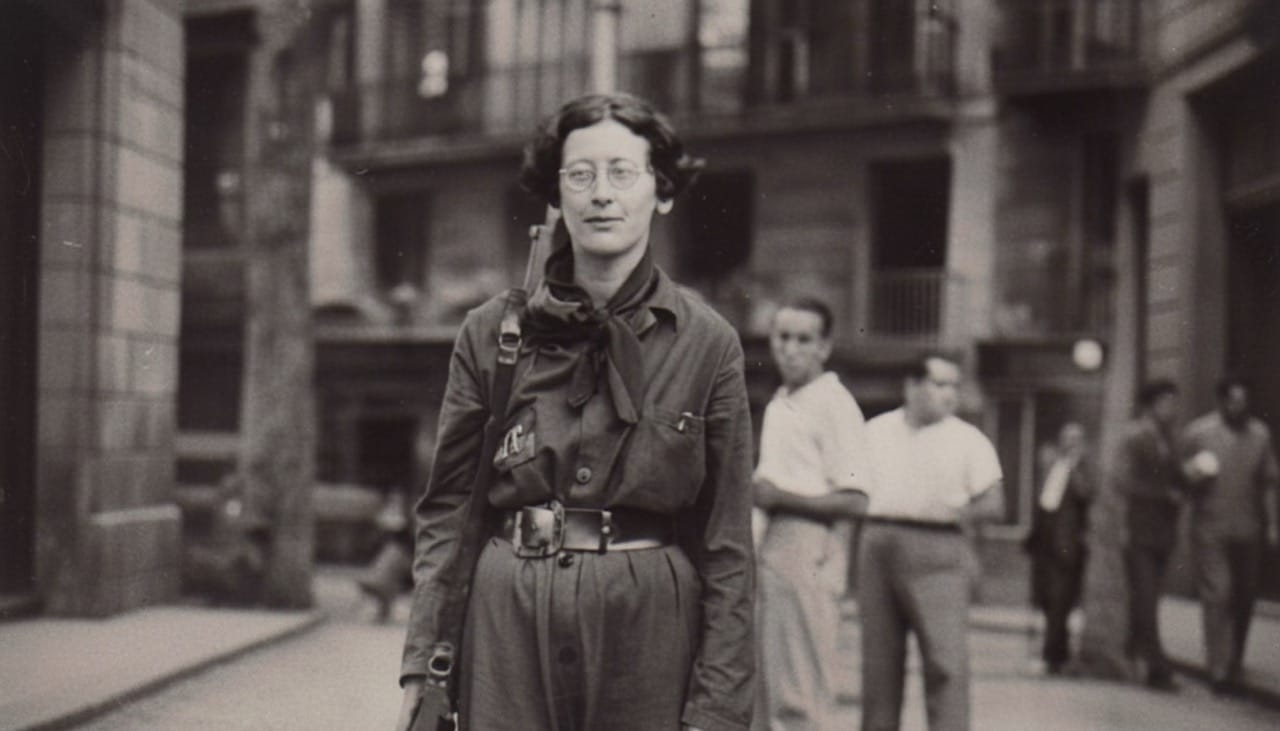
Philosophy is often criticized for being confined to the ivory tower—a discipline of abstract thoughts rather than tangible actions. Simone Weil shattered this stereotype entirely. As one of the most profound and enigmatic French philosophers of the 20th century, Weil did not just theorize about suffering and justice; she actively sought to embody them. Her life stands as a fascinating intersection of intense spiritual mysticism and fierce on-the-ground activism.
Stepping Out of the Ivory Tower
For Weil, true compassion was not a passive feeling but a demanding physical reality. She firmly believed that one could not advocate for the working class without truly understanding the crushing weight of their daily existence. This radical empathy drove her to voluntarily leave the comforts of academia and subject herself to grueling factory labor.
By working alongside the oppressed, she aimed to strip away her privilege and experience the systemic exhaustion that defined industrial life. She didn't just want to write about labor rights; she wanted to feel the physical toll of industrialization in her own bones.
The Mystical Roots of Resistance
What makes Weil’s journey so captivating is the spiritual engine driving her political actions. Unlike many labor activists of her era whose motivations were strictly secular or economic, Weil’s fight was deeply rooted in profound, personal mystical experiences. She saw the act of sharing the burdens of others not merely as a political strategy, but as a transcendent, holy duty.
When World War II erupted, this same unwavering spiritual conviction pushed her beyond intellectual protest. Driven by a need to actively combat tyranny, she joined the perilous ranks of the French Resistance, consistently putting herself in harm's way for the liberation of others.
The Cost of Radical Empathy
Her uncompromising dedication, however, invites a complex psychological and philosophical debate. Weil's insistence on depriving herself of food to match the rations of frontline soldiers, coupled with her continuous physical exertion despite her fragile health, raises difficult questions about the true nature of her convictions.
Examining her life requires us to confront the delicate boundary between profound devotion and tragic self-destruction. We are forced to ask: was her spirituality an infinite source of strength that allowed her to transcend human limitations, or did her intense idealism ultimately push her toward an unsustainable, fatal asceticism? Exploring the paradox of Simone Weil offers a challenging, yet deeply inspiring perspective on what it means to truly live one's philosophy in a broken world.
Want to dive deeper into Weil's philosophy and explore the true demands of radical compassion?
Join "PhiloCrux" community.
Unlock high-density masterclasses and investigations into ideas surviving outside the algorithmic consensus. Support independent thought and get full access to our digital library.
Join Now