True power never shouts; it whispers. It does not march through the public square in military fatigues, nor does it demand that statues be erected in its honor. Instead, true power weaves itself into the very fabric of society, becoming the invisible architecture through which all political, economic, and cultural life must flow. It sets the boundaries of acceptable thought, funds the institutions that define reality, and quietly curates the menus from which democratic populations are permitted to choose.
For the modern citizen, the belief in absolute democratic agency is a comforting psychological necessity. We vote, we debate, and we organize, under the assumption that the levers of history are operated by the collective will of the electorate. But in 1966, a highly respected historian from Georgetown University—a man who would later be publicly cited as a profound influence by President Bill Clinton—shattered this comforting illusion.
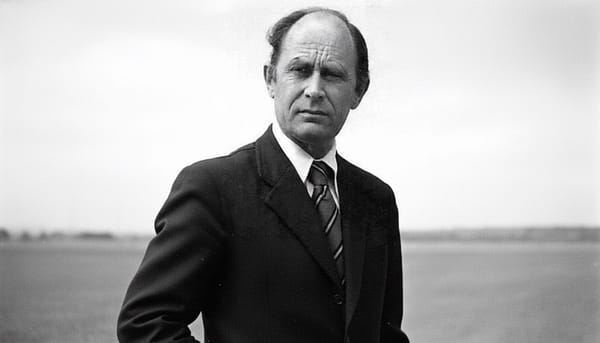
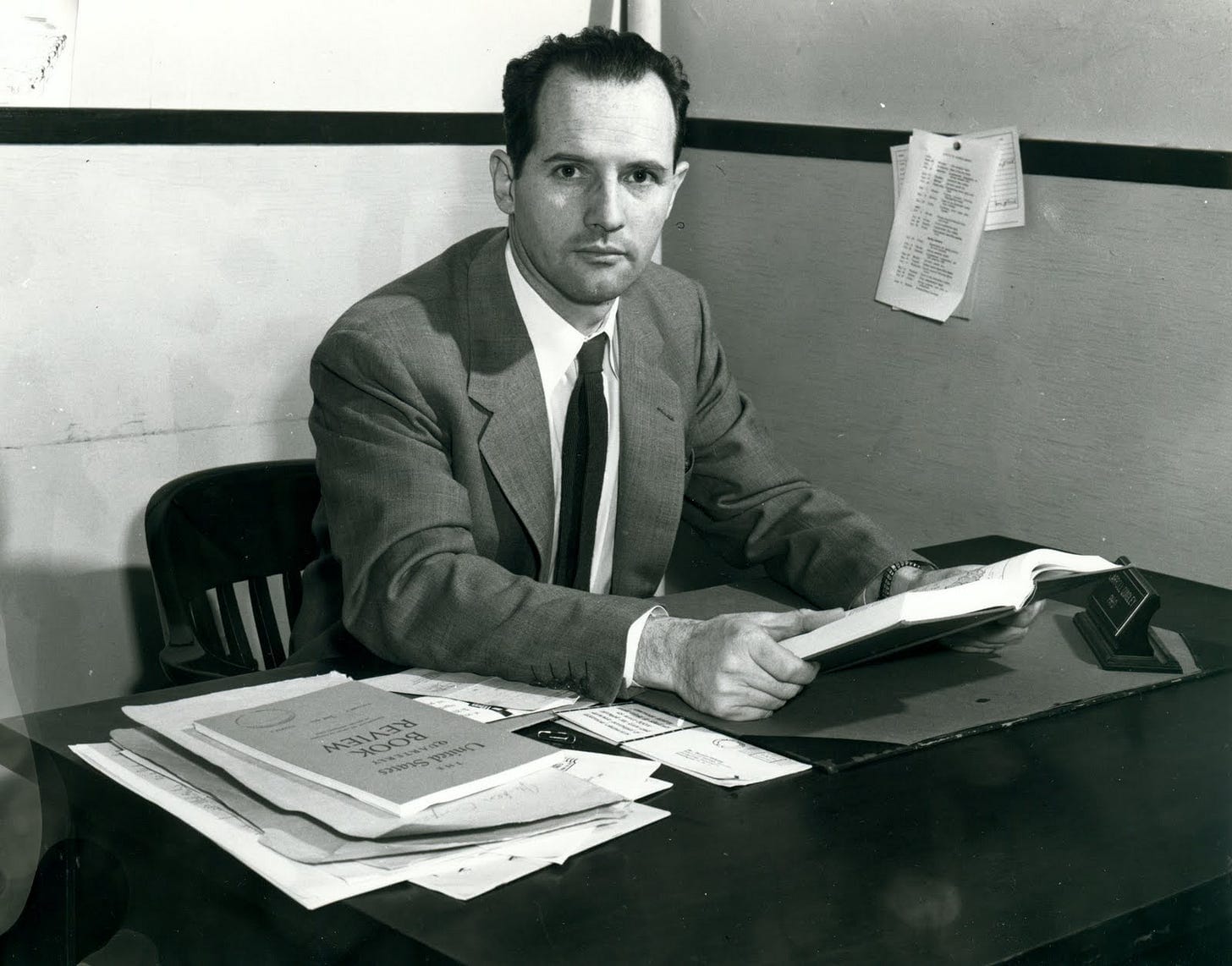
His name was Carroll Quigley. His magnum opus, a staggering 1,300-page historical tome titled Tragedy and Hope: A History of the World in Our Time, contained a revelation so explosive that it has been fiercely debated, suppressed, and mythologized ever since. Quigley did not write as a marginalized outsider or a paranoid conspiracy theorist. He wrote as an establishment insider, an academic who had been granted unprecedented access to the private archives of one of the most powerful, unacknowledged political networks in modern history: The Milner Group.
Quigley revealed the existence of a highly coordinated, elite Anglo-American network—often referred to as the Round Table or the Milner Group—that had successfully orchestrated global policy for nearly a century. Their ultimate objective? Nothing less than the creation of a unified, globally integrated system of financial control, capable of dominating the political systems of all countries and the economy of the world as a whole.
To understand the world we inhabit today—a world of supranational organizations, unified central banking policies, and an increasingly homogenized global elite—we must return to Quigley’s explosive mapping of this invisible empire. We must dissect the anatomy of a network that realized early on that the most effective way to rule the world was to convince the world that no one was ruling it at all.
The Genesis of a Global Vision: Rhodes, Milner, and the Blueprint for Hegemony
To comprehend the sheer scale of the Milner Group, one must trace its roots back to the late 19th century, to the diamond-studded dust of South Africa and the imperial ambitions of Cecil John Rhodes.
Rhodes, who had amassed an incomprehensible fortune through the De Beers mining monopoly, was driven by a fervent, almost religious belief in the civilizing destiny of the Anglo-American world. In his view, the British Empire and the United States represented the pinnacle of human political evolution. To prevent global conflict and usher in an era of perpetual peace, Rhodes believed the English-speaking peoples needed to federate, eventually bringing the entire globe under their benevolent administrative umbrella.
But Rhodes knew that such a monumental task could not be achieved through traditional democratic politics, which were too volatile, short-sighted, and subject to the whims of the uneducated masses. In a series of wills, beginning in 1877, Rhodes laid out a blueprint for a secret society modeled explicitly on the Jesuit Order. The purpose of this society was to covertly absorb the wealth of the world and use it to execute his vision of global Anglo-American hegemony.
In 1891, this vision moved from paper to reality. Rhodes, alongside journalist William T. Stead and Lord Esher (Reginald Brett), formed the core of this secret society. But it was the induction of Alfred Milner—an immensely capable, brilliant, and ruthlessly efficient British colonial administrator—that transformed Rhodes’ romantic dream into an operational juggernaut.
When Rhodes died in 1902, Milner took the reins. As the High Commissioner for Southern Africa, Milner recruited a cadre of brilliant, aristocratic young men from Oxford and Cambridge to help him administer the region following the Boer War. This group, affectionately dubbed "Milner’s Kindergarten," became the operational vanguard of the invisible empire. They were fiercely loyal, ideologically unified, and strategically placed.
Returning to England, Milner and his Kindergarten established the "Round Table" groups in 1909—a network of semi-secret discussion groups spanning the British Dominions and the United States. Following the devastation of World War I, this network recognized that the center of global power was shifting from London to Washington. To maintain their grip on the trajectory of world affairs, the Milner Group orchestrated the creation of two public-facing think tanks in 1919 and 1921: The Royal Institute of International Affairs (Chatham House) in London, and its American counterpart, the Council on Foreign Relations (CFR) in New York.
Through these institutions, the Milner Group transitioned from a secret society of imperialists into a sophisticated, transatlantic network of financiers, academics, media moguls, and policymakers. They had successfully built the engine of the 20th century.
Continue reading this briefing
You've reached the members-only portion of this 17 min read essay. Become a PhiloCrux member to finish it — and unlock the full archive of 25+ deep-dive masterclass and private audio briefing.
Already a member? Sign in