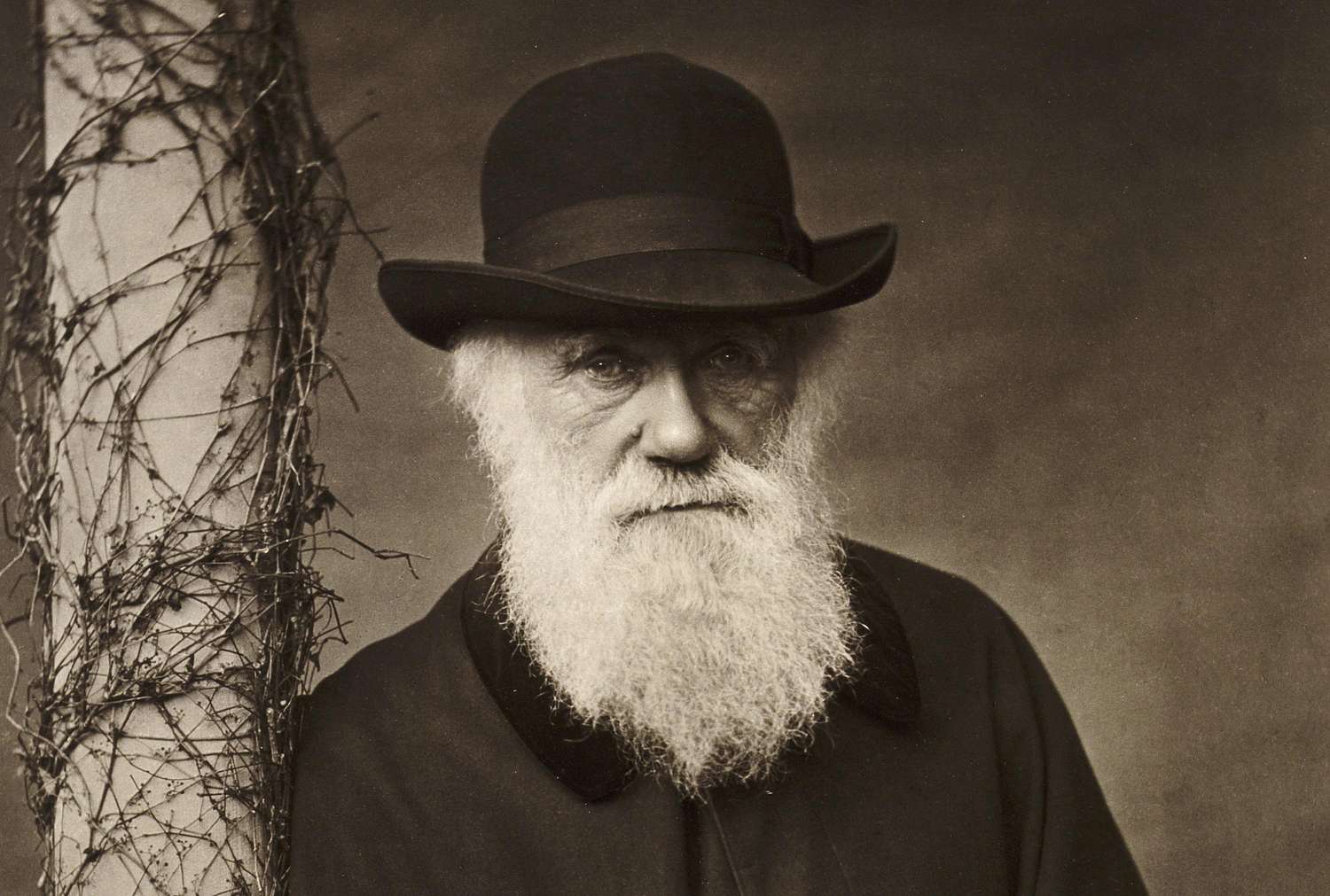
In the damp, gaslit winter of 1871, the intellectual foundations of the Western world were subjected to a seismic tremor. Twelve years had passed since Charles Darwin shattered the teleological comforts of Victorian society with On the Origin of Species. In that foundational text, Darwin had been conspicuously, almost strategically, silent on the matter of humanity, offering only the cryptic prophecy that "light will be thrown on the origin of man and his history." But with the publication of The Descent of Man, and Selection in Relation to Sex, the prophesied light arrived—and it was blinding.
Darwin finally turned his analytical lens upon the reader. He stripped away the divine breath that supposedly animated human clay, replacing it with the slow, blind, and bloody mechanics of evolutionary descent. We were not fallen angels; we were risen apes. Yet, the shock of The Descent of Man did not end with humanity’s relocation to the primate branch of the tree of life. The text waded into the most volatile, politically charged, and philosophically profound waters of the nineteenth century: the nature of human variation, the origins of racial divergence, and the haunting specter of biological inequality.
To read The Descent of Man today is to confront a masterpiece of biological unification that is simultaneously scarred by the prejudices of its era. It is a text that binds all of humanity into a single, unbreakable family tree, yet casually ranks the branches of that tree in a hierarchy of civilization and savagery. How do we reconcile the Darwin who provided the ultimate scientific argument for human brotherhood with the Darwin whose words would later be weaponized to justify imperialism, eugenics, and racial subjugation?
This is not merely a historical curiosity; it is a profound philosophical paradox. The questions Darwin wrestled with in 1871—whether human differences are fundamental or superficial, whether inequality is a biological destiny or a sociological construct, and how scientific objectivity is compromised by cultural hegemony—remain the exact questions haunting our modern discourse on genetics, race, and society. To understand our present anxieties surrounding biological determinism, we must return to the source. We must step into the dialectic of Darwin’s descent.
Victorian Echoes and the Architecture of Human Origins
To grasp the magnitude of Darwin’s intervention, one must first understand the intellectual battlefield onto which he stepped. Nineteenth-century anthropology was caught in a vicious, high-stakes war between two prevailing paradigms: monogenism and polygenism.
Monogenism, largely rooted in the Judeo-Christian tradition of a single creation (Adam and Eve), posited that all human beings belonged to a single species. However, to account for the obvious physical differences between populations, monogenists often relied on "degeneration theory"—the idea that non-white races had physically and morally degraded from an original, perfect Caucasian ideal due to climate or sin.
Polygenism, conversely, was the rising star of "secular" science. Champions of polygenism, such as the prominent American scientist Louis Agassiz and the physician Samuel George Morton, argued that the physical differences between human races were too vast to be the result of environmental adaptation over a few thousand years. Therefore, they concluded, human races must be entirely separate species, created in different geographic zones. Polygenism provided a highly convenient, pseudo-objective scientific justification for the transatlantic slave trade and European colonial expansion. If the African or the Indigenous American were a different species entirely—biologically distinct and inherently inferior—then the moral crisis of subjugation evaporated.
This was the fraught context in which Darwin spent the 1860s compiling his notes. Darwin was a staunch abolitionist, born into a family (the Wedgwoods and the Darwins) that had actively campaigned against slavery for generations. During his voyage on the HMS Beagle, he had witnessed the horrors of slavery in Brazil firsthand, writing in his journal that the memory made his blood boil. Yet, he was also a man of his time, an upper-class Victorian gentleman who viewed the indigenous peoples he encountered—particularly the Fuegians at the southern tip of South America—with a mixture of pity, horror, and profound paternalism.
When Darwin finally published The Descent of Man, he aimed to destroy the polygenist argument by proving that all humans shared a recent, common ape-like ancestor. He sought to unify humanity. But in doing so through the mechanism of natural selection, he inadvertently introduced a new, dynamic framework for biological inequality.
Continue reading this briefing
You've reached the members-only portion of this 17 min read essay. Become a PhiloCrux member to finish it — and unlock the full archive of 25+ deep-dive masterclass and private audio briefing.
Already a member? Sign in