The Shadows in the Scatterplot
Imagine a man walking through the soot-stained streets of Victorian London, a hidden mechanism ticking quietly in his pocket. He is not keeping time; he is keeping score. With a pricking needle concealed in his glove, he secretly records the physical attractiveness of the women he passes, categorizing them into a quantifiable index of beauty. Later, he will measure the exact dimensions of heads in a laboratory, track the frequency of yawns in a theater, and attempt to quantify the efficacy of prayer.
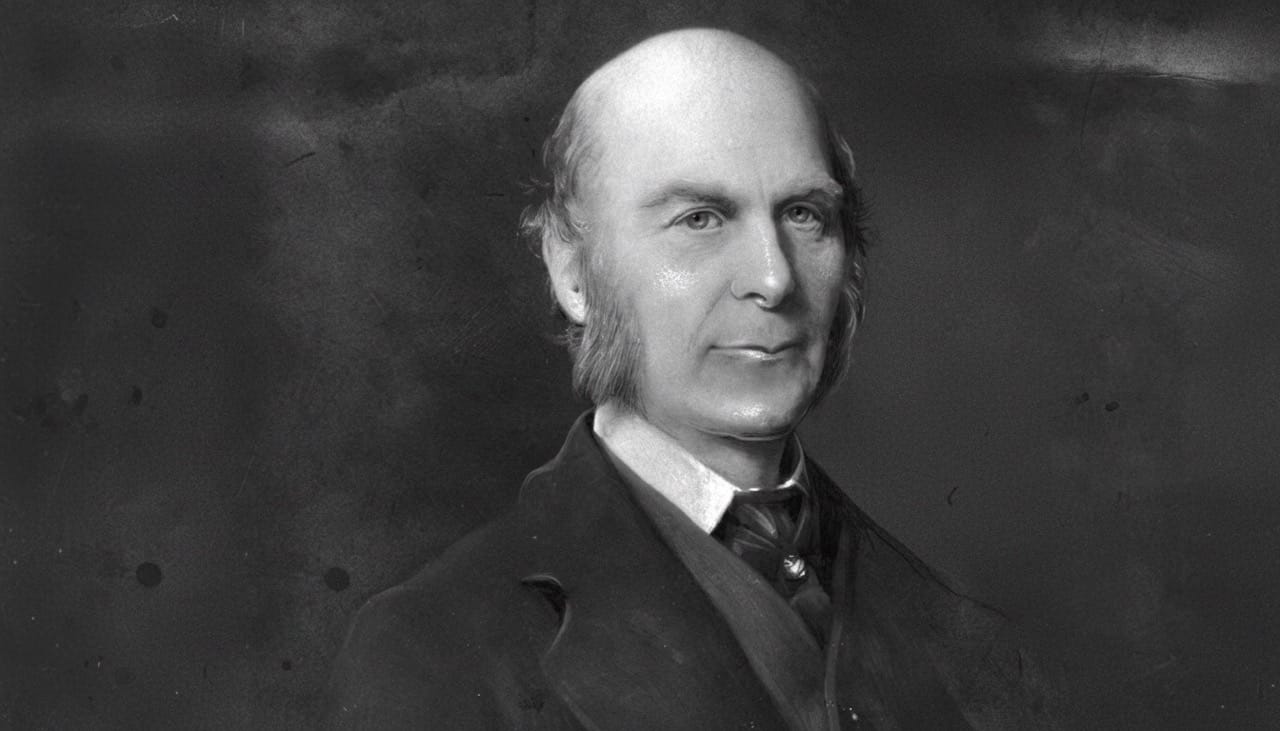
This man was Sir Francis Galton, a Victorian polymath of staggering intellect and boundless curiosity. To understand Galton is to confront the genesis of the modern world’s obsession with metrics, measurement, and meritocracy. He was driven by a singular, consuming conviction: that virtually everything in the human experience could be counted, and that whatever could be counted could be mapped, predicted, and ultimately controlled.
Yet, of all the phenomena Galton sought to quantify, none was more elusive, nor more culturally explosive, than human intelligence. In 1869, he published Hereditary Genius, a book that fundamentally ruptured our understanding of human capability. Before Galton, "genius" was widely considered a divine spark, a mystical gift bestowed by providence. After Galton, it was reduced to a statistical probability—a heritable trait distributed predictably across a mathematical curve.
In doing so, Galton achieved something scientifically miraculous and morally terrifying. He laid the foundational architecture for modern statistics, psychometrics, and the concept of the Intelligence Quotient (IQ). Simultaneously, he birthed a pseudo-scientific ideology that would cast a long, blood-soaked shadow over the 20th century. He gave it a name that still sends shivers down the spine of history: Eugenics.
To grapple with Galton’s legacy is to engage in a profound epistemological crisis. How do we reconcile the undeniable mathematical brilliance of his discoveries with the horrific social policies they inspired? Are we still living in a Galtonian world, unconsciously sorting human dignity along a bell curve?
Darwin’s Cousin and the Promethean Urge to Measure
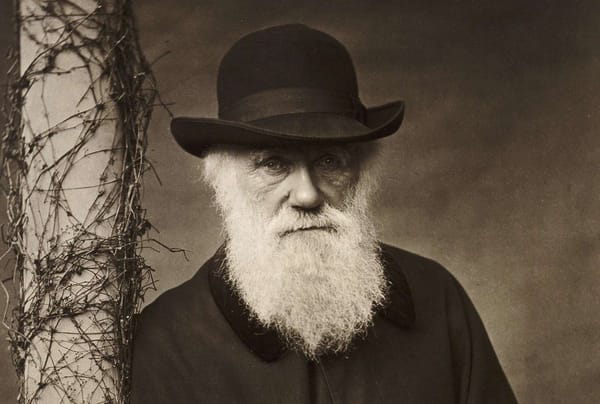
To comprehend the seismic impact of Hereditary Genius, we must first understand the intellectual tectonic plates shifting beneath mid-19th-century England. Galton was born into the wealthy, intellectual aristocracy of the Darwin-Wedgwood family. He was, notably, the half-cousin of Charles Darwin.
When Darwin published On the Origin of Species in 1859, it shattered the theological consensus of human origins. For Galton, reading his cousin’s masterwork was a visceral, religious experience. It liberated him from the constraints of orthodox theology and replaced the hand of God with the engine of natural selection. But while Darwin was content to observe the slow, blind watchmaker of evolution shaping the beaks of finches and the shells of tortoises, Galton’s mind leaped forward with an audacious, Promethean arrogance.
If physical traits like height, eye color, and beak shape were inherited, Galton reasoned, why not mental traits? Why not character, morality, and intellect?
Galton set out to prove this hypothesis not through biology—the mechanism of DNA was still a century away—but through biography and mathematics. In Hereditary Genius, he meticulously analyzed the lineages of eminent men: judges, statesmen, commanders, scientists, and poets. He scoured obituaries and biographical dictionaries, compiling massive datasets. His conclusion was unequivocal: eminence clustered in families at a rate far exceeding statistical chance. A brilliant judge was overwhelmingly more likely to have a brilliant son than a man chosen at random from the population.
Mastercalss Material
Galton borrowed the concept of the "normal distribution" (the bell curve) from the Belgian astronomer Adolphe Quetelet, who had used it to describe physical traits like the chest measurements of Scottish soldiers. Galton’s radical leap was applying this curve to the human mind. He posited that intelligence was not a binary state of "smart" or "dumb," but a continuous variable, clustering heavily around a mediocre average and tapering off into the extremes of profound disability and transcendent genius.
To prove his theories over the ensuing decades, Galton invented the statistical concepts of correlation and regression toward the mean—tools that remain the absolute bedrock of modern science, utilized today in everything from quantum physics to machine learning algorithms.
Yet, beneath the elegant math lay a chilling teleological goal. In 1883, Galton coined a term derived from the Greek eugenes, meaning "well-born." He proposed that society should actively encourage the breeding of its most "eminent" citizens while discouraging the reproduction of the "feeble-minded." The statistical mapping of human variance was never meant to be purely descriptive; it was meant to be fiercely prescriptive.
Continue reading this briefing
You've reached the members-only portion of this 17 min read essay. Become a PhiloCrux member to finish it — and unlock the full archive of 25+ deep-dive masterclass and private audio briefing.
Already a member? Sign in