The Map That Broke the World
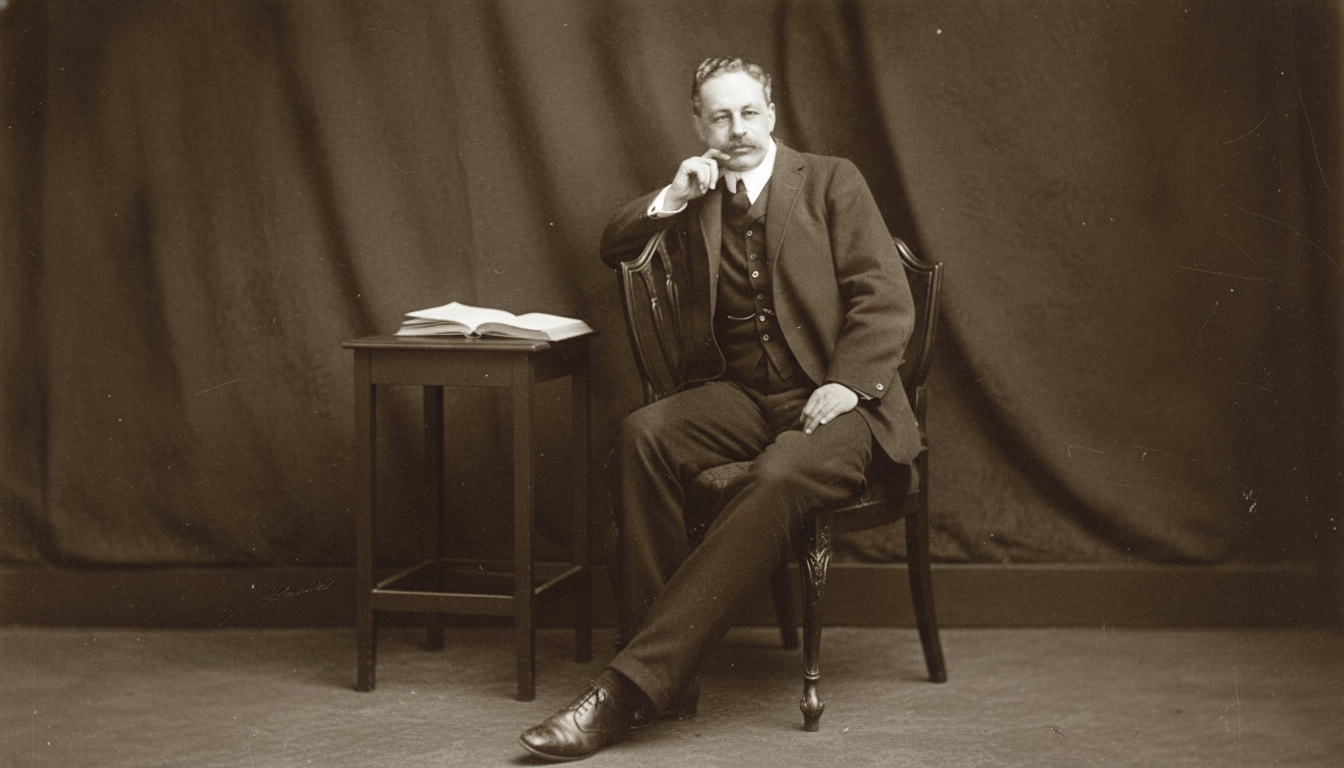
On the frigid evening of January 25, 1904, inside the mahogany-paneled halls of the Royal Geographical Society in London, a 42-year-old Oxford academic named Halford John Mackinder stood before a gathering of the British Empire’s intellectual and political elite. The mood of the era was one of unbridled techno-optimism. The telegraph had annihilated distance; the steamship had conquered the oceans; the British Royal Navy enforced a seemingly eternal Pax Britannica. The prevailing consensus was that the future belonged to liberal democracies, global trade, and the unassailable supremacy of sea power.
Mackinder, however, had not come to flatter the empire. He had come to deliver a prophecy of its doom.
In a paper titled "The Geographical Pivot of History," Mackinder unveiled a cartographic framework that would fundamentally permanently alter the discipline of geopolitics. He presented a map of the world not as a collection of scattered continents, but as a single, interconnected organism. In doing so, he shattered the illusion of maritime invincibility and introduced a terrifying new calculus of global power. He argued that the era of sea power—the "Columbian epoch" of exploration and coastal conquest—was drawing to a close. The future, he warned, belonged to the masters of the land.
Mackinder identified a vast, impenetrable fortress in the center of Eurasia, inaccessible to the guns of the Royal Navy. He called it the "Pivot Area," and later, the "Heartland." His thesis was elegantly brutal: whoever could organize the sprawling, resource-rich immensity of this Eurasian core would inevitably construct a war machine capable of dominating the globe. Fifteen years later, in the ashes of the First World War, he would distill this nightmare into the most famous—and dangerous—geopolitical maxim ever articulated:
"Who rules East Europe commands the Heartland; Who rules the Heartland commands the World-Island; Who rules the World-Island commands the world."
For over a century, this single formulation has haunted the halls of power. It became the strategic obsession of the British Empire, the geopolitical bedrock of the Cold War doctrine of Containment, and, most tragically, the intellectual scaffolding for Nazi Germany’s apocalyptic drive to the East. Because of this dark association, Mackinder’s name was effectively excommunicated from Western academia, dismissed as an archaic determinist or a proto-fascist.
Yet, as we watch Russian tanks roll across the Eastern European steppe and Chinese high-speed rail networks stitch together the Eurasian landmass, the ghost of Halford Mackinder has returned to exact its revenge. To understand the bloody chess matches of the 21st century, we must first resurrect the unexpurgated genius of the man who decoded the map of the world.
The End of the Columbian Epoch
To grasp the revolutionary nature of Mackinder’s 1904 lecture, one must understand the epistemological water in which Edwardian Britain swam. For four hundred years, since Columbus sailed west and Vasco da Gama sailed east, the world had been defined by European maritime expansion.
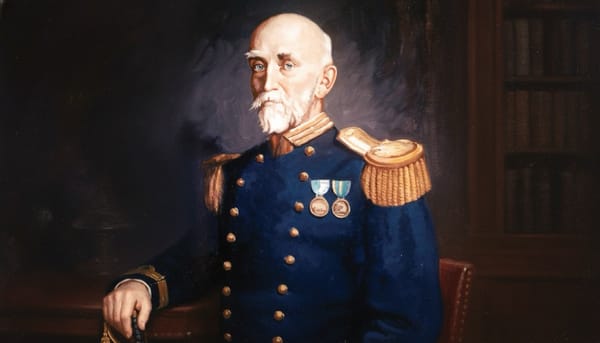
The American naval strategist Alfred Thayer Mahan had recently codified this worldview in his seminal 1890 work, The Influence of Sea Power upon History. Mahan argued that command of the sea was the primary historical factor in the rise and fall of empires. Ships could move vast quantities of men and materiel cheaper and faster than overland caravans. The oceans were the great highways of commerce, and the nation that controlled the maritime chokepoints—Gibraltar, Suez, Malacca, Panama—controlled the world. Britain had built the largest empire in human history precisely upon this Mahanian doctrine.
Mackinder, an evolutionary biologist turned geographer, looked at the same world map and saw a paradigm in its death throes.
He observed that the "Columbian epoch" was over because the world was now entirely explored and politically appropriated. There were no more "new worlds" to discover; the frontier was closed. The globe had become a "closed political system." In this new reality, Mackinder noted, "every shock, every disaster or superfluity, is now felt even to the antipodes."
But more importantly, Mackinder saw that the technological advantage was shifting from the sea back to the land. The instrument of this revolution was the railway.
For centuries, the vast interior of Eurasia had been the domain of horse-riding nomads—the Huns, the Mongols, the Turkic tribes—who possessed a terrifying mobility that allowed them to strike the settled, agricultural peripheries of Europe and China at will. This era of land-based nomadic dominance was only broken when the oceanic ship allowed Europeans to bypass the Eurasian interior entirely, outflanking the land powers.
Now, however, the transcontinental railway was replacing the horse and the camel. Mackinder watched with growing alarm as the Russian Empire constructed the Trans-Siberian Railway, a ribbon of steel connecting Moscow to the Pacific Ocean. The railway negated the primary advantage of sea power: mobility. Suddenly, massive armies and industrial resources could be shuttled across the Eurasian landmass faster than ships could sail around it. The land was awakening from its centuries-long slumber. The pivot of history was shifting back to the center.
Continue reading this briefing
You've reached the members-only portion of this 17 min read essay. Become a PhiloCrux member to finish it — and unlock the full archive of 25+ deep-dive masterclass and private audio briefing.
Already a member? Sign in