Millions of people around the world sat glued to their television screens in early 1991, watching the night skies over Baghdad illuminate with the green hue of night-vision cameras and anti-aircraft fire. For the first time in human history, global audiences were watching a major geopolitical conflict unfold in real-time from the comfort of their living rooms. It felt like raw, unfiltered history. But beneath the surface of this groundbreaking broadcast lay a profound philosophical question about the nature of truth itself.
What if the event broadcasted into our homes was not actually a war, but a carefully constructed media simulation?
The Birth of the 24/7 News Spectacle
The early 1990s marked a radical shift in how society experienced global events. With the advent of round-the-clock cable news networks, warfare was fundamentally transformed. It moved away from being a distant, chaotic reality documented after the fact, and became a highly sanitized, packaged television event.
Audiences were fed a continuous loop of glowing radar screens, precise "smart bomb" footage, and polished commentary from military experts. The chaotic, visceral reality of combat was replaced by sterile, video-game-like imagery. Information was heavily curated, government censorship was tightly enforced through military press pools, and the narrative was meticulously controlled to present a clean, technological victory.
Baudrillard’s Provocation: A War of Images
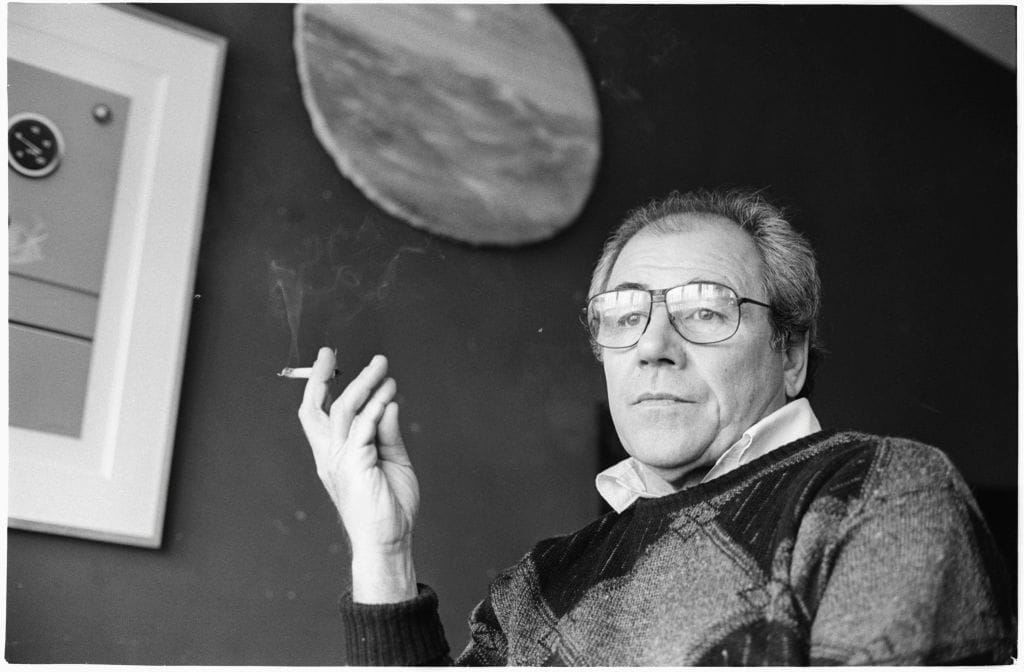
This unprecedented media environment prompted French philosopher Jean Baudrillard to formulate one of the most controversial and misunderstood critiques of the 20th century. He famously argued that the conflict, as the public consumed it, did not actually take place.
Baudrillard was not denying that violence occurred or that lives were lost. Instead, he was pointing to a much deeper crisis of perception. He argued that the barrage of carefully selected imagery and endless talking-head analysis had entirely replaced the physical reality of the event. The map had replaced the territory. The public was not experiencing a war; they were consuming a "hyperreality"—a media-generated simulation that was more real to the viewer than the actual events happening on the ground in the Middle East.
Hyperreality and the Death of Objective Truth
The concept of hyperreality forces us to question the mechanisms of modern information consumption. When a narrative is perfectly constructed, repeated infinitely, and stripped of all opposing context, the simulation becomes the accepted historical record. The Gulf War served as the ultimate testing ground for this phenomenon, proving that those who control the flow of images ultimately control the collective perception of reality.
Understanding this dynamic is no longer just an academic exercise. In an era dominated by algorithmic feeds, deepfakes, and state-sponsored media manipulation, the line between reality and simulation has only grown thinner. Analyzing how the 1991 conflict was commodified into a television spectacle provides a vital framework for recognizing how contemporary narratives are shaped, filtered, and sold to the public today. Recognizing the simulation is the first necessary step toward becoming a truly critical consumer of information.
Unlock the full analysis of Baudrillard's philosophy and discover the hidden mechanics of modern media manipulation.
Join "PhiloCrux" community.
Unlock high-density masterclasses and investigations into ideas surviving outside the algorithmic consensus. Support independent thought and get full access to our digital library.
Join Now