Look around at the towering institutions, complex global economies, and vast political structures of the modern world. They feel permanent, rooted in an unshakeable foundation of technological and social progress. Yet, history is little more than a graveyard of "permanent" civilizations.
Why do seemingly untouchable empires crumble, and why does the rot so often originate from within?
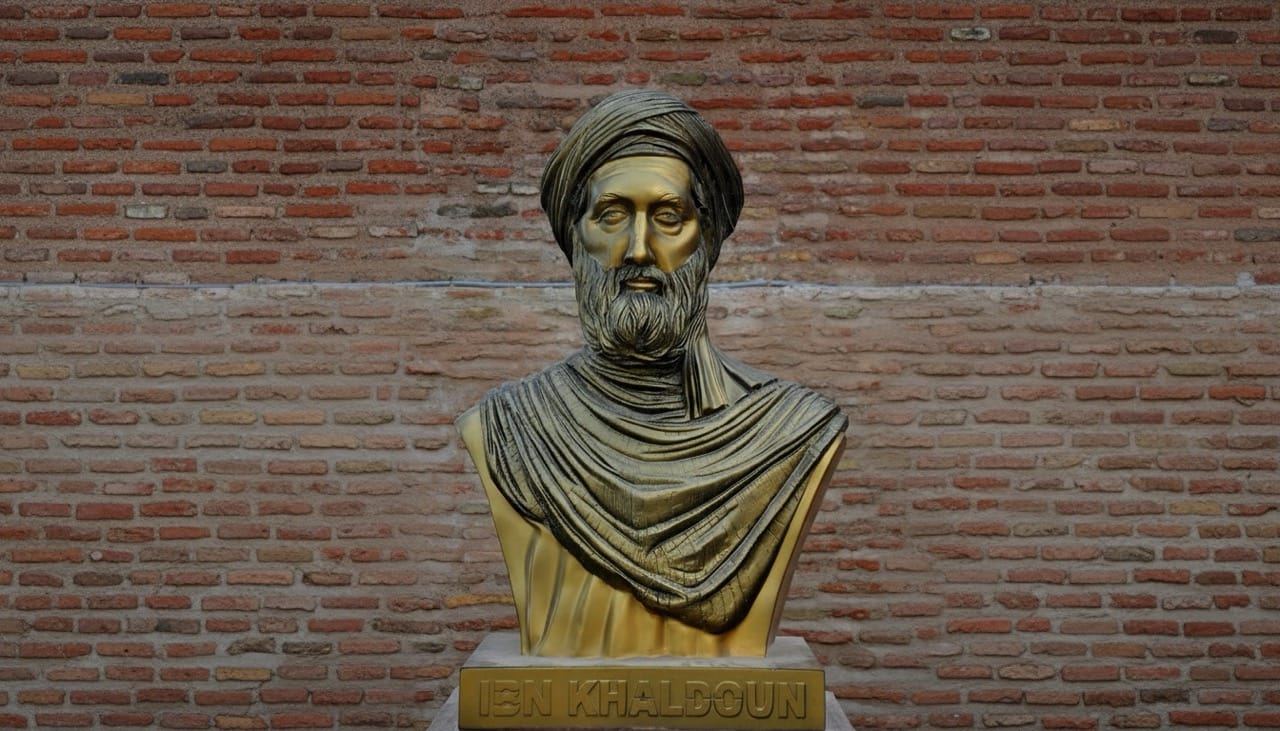
Long before modern sociologists and economists began charting the rise and fall of nations, a 14th-century thinker named Ibn Khaldun uncovered a cyclical pattern of societal evolution that remains hauntingly accurate today. His philosophy of history stripped away the myths of divine right and endless progress, revealing a mechanical, almost biological lifecycle to human civilizations.
The Engine of Empire: Asabiyyah
Khaldun realized that civilizations are not born from wealth or comfort; they are forged in the fires of hardship. To explain this, he introduced a concept that serves as the cornerstone of his philosophy: Asabiyyah.
Often translated as "social cohesion" or "group solidarity," Asabiyyah is the invisible glue that binds a people together. It is the shared sense of purpose and mutual reliance that allows a marginalized or struggling group to overcome massive obstacles, conquer established powers, and build a new society. In its early stages, a society fueled by strong Asabiyyah is dynamic, unified, and resilient.
But Ibn Khaldun observed a tragic paradox in the human condition: the very success generated by Asabiyyah guarantees its eventual destruction.
The Pathology of Success
As a rising group consolidates power, the shared struggle that once united them begins to fade. The austere resilience of the founders is gradually replaced by the comforts of the successors. A profound psychological and cultural shift occurs across the generations.
Once a society reaches the peak of its dynastic power, the seeds of decay take root. Success breeds luxury, and luxury breeds complacency. The powerful elites become detached from the struggles of the common people, prioritizing personal enrichment over collective well-being. This shift marks the beginning of an insidious decline.
Echoes in the Modern World
As luxury softens a civilization, the economic and social structures begin to fracture. The state, desperate to maintain its opulent lifestyle and expanding bureaucracy, imposes heavier financial burdens on its populace. Economic fragility takes hold, leading to widespread dissatisfaction and a catastrophic loss of institutional trust. The society fragments, leaving it vulnerable to internal collapse or external replacement by a new group possessing the raw, uncorrupted Asabiyyah they have long since lost.
When we look at the trajectory of our current world, Khaldun’s observations read less like ancient history and more like a modern diagnosis.
Are we witnessing the same symptoms of decay he described over six centuries ago? From increasing social fragmentation and economic strain to a profound distrust of authority and detached elites, the parallels are impossible to ignore. Understanding Ibn Khaldun’s cycle is not merely an academic exercise—it is a critical lens through which we must examine the forces shaping our present. The ultimate question remains: can modern societies recognize this pattern in time, or are we bound to repeat the inevitable?
Want to dive deeper into the forces shaping our history and explore if we can escape this ancient cycle?
Join "PhiloCrux" community.
Unlock high-density masterclasses and investigations into ideas surviving outside the algorithmic consensus. Support independent thought and get full access to our digital library.
Join Now