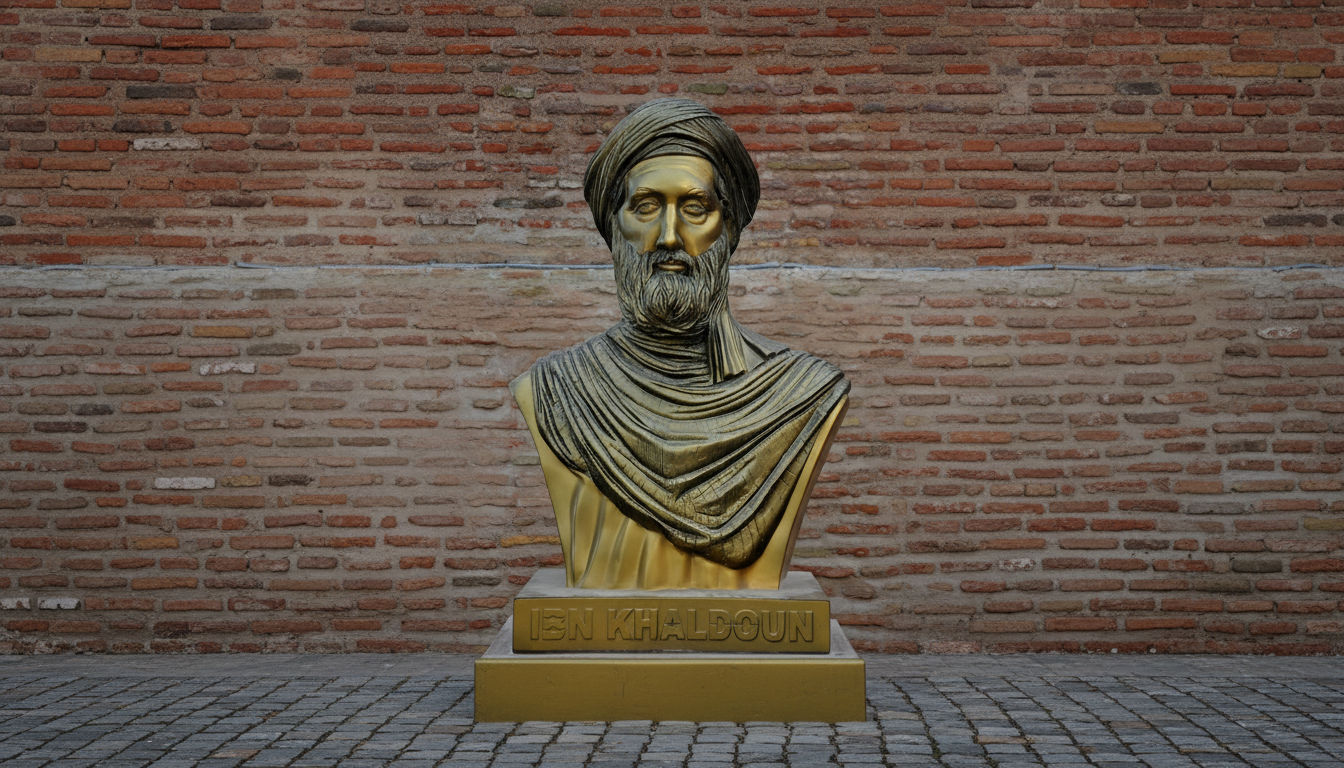
Every great empire in human history—from the heights of Rome to the sprawling dynasties of the ancient world—has eventually crumbled. Is this systemic failure just a matter of historical bad luck, or is there a hidden, predictable formula behind the rise and fall of human societies?
Over 600 years ago, a brilliant scholar named Ibn Khaldun answered this question with startling accuracy. Long before the advent of modern sociology or political science, Khaldun documented the exact mechanics of societal decay. His groundbreaking insights challenge our modern assumptions about endless progress and offer a sobering look at human nature.
The Cyclical Nature of Empire
In his 14th-century masterpiece, The Muqaddimah, Khaldun didn't just record historical events; he analyzed the sociological DNA of human communities. Most historical narratives view human progress as a straight, upward-trending line. Khaldun, however, recognized that history operates in rigid cycles.
He observed a recurring historical rhythm: hardship creates resilient communities, which band together to build prosperous societies. However, that very prosperity inevitably gives birth to luxury, complacency, and ultimately, destruction. According to Khaldun, the very success of a civilization plants the seeds of its own demise.
The Hidden Power of 'Asabiyyah'
The central pillar of Khaldun’s theory is a powerful concept known as Asabiyyah. Often translated as "social cohesion," "group solidarity," or a shared sense of purpose, Asabiyyah is the invisible glue that binds a people together.
When a society is young or facing external threats, its Asabiyyah is remarkably high. This collective unity allows seemingly outmatched groups, such as nomadic tribes, to overthrow massive, established empires. The strength of a society does not solely rely on its wealth or its military technology, but on the depth of its social solidarity.
But what happens to a society when the initial struggle ends and an era of immense wealth begins?
Are We Repeating History?
As generations pass and a civilization becomes accustomed to luxury and individualism, the critical bonds of Asabiyyah begin to dissolve. People become alienated from one another, social trust plummets, and the collective drive that built the society is replaced by personal self-interest. Khaldun noted that once a society loses its internal cohesion, it becomes vulnerable to collapse from within—or ripe for conquest by a new group possessing stronger Asabiyyah.
The brilliance of Ibn Khaldun’s work lies in its shocking relevance to the modern world. When we look closely at today's shifting global powers, deep political polarization, and the ongoing struggle to maintain community bonds, his 14th-century writings feel less like a history lesson and more like a modern diagnosis.
Understanding Khaldun's cycles of history allows us to critically examine our own era. Are modern societies currently experiencing a fatal loss of Asabiyyah? By looking into the past, we may just find the blueprint for understanding our future.
Join "PhiloCrux" community.
Unlock high-density masterclasses and investigations into ideas surviving outside the algorithmic consensus. Support independent thought and get full access to our digital library.