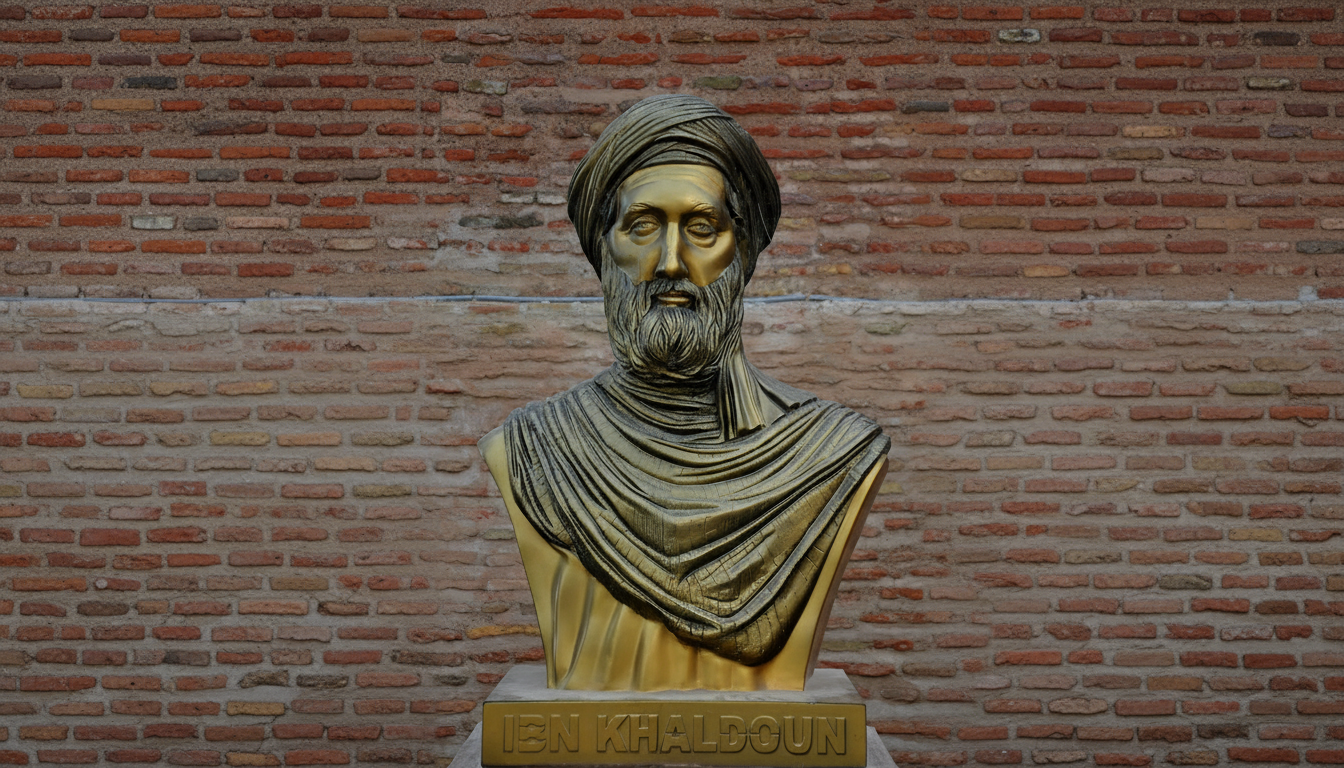
History is rarely a straight line. While modern society often views progress as an uninterrupted march forward, the reality is far more cyclical. Long before contemporary historians mapped the lifespan of empires, a 14th-century visionary named Ibn Khaldun identified the hidden mechanisms driving human civilization. In his groundbreaking work, the Muqaddimah, he laid out a universal framework for understanding why societies flourish and why they inevitably fracture.
The Rhythms of Rise and Ruin
Khaldun observed that the lifecycle of a civilization closely mirrors the natural lifecycle of a living organism. There is a period of dynamic growth, an era of static plateau, and eventually, unavoidable decline. But what triggers these phases? The Muqaddimah argues that it is rarely just external forces, such as geography or climate, that dictate a society's fate. Instead, the true catalyst lies within the cultural and psychological fabric of the people themselves.
Civilizations are born hungry and united, but the very success they achieve often sows the seeds of their own destruction. Wealth, comfort, and the complexities of urban life gradually transform the culture, shifting priorities away from collective survival toward individual indulgence.
The Invisible Force of Social Cohesion
At the heart of Khaldun’s philosophy is a concept known as Asabiyyah, often translated as social cohesion or group solidarity. This invisible bond is the ultimate currency of historical power. When a group shares a profound sense of unity and collective purpose, they possess the unstoppable momentum required to build empires and reshape the world.
However, as generations settle into the comforts of political stability and economic prosperity, this foundational solidarity begins to erode. The breakdown of Asabiyyah is the silent warning sign of a civilization in decay. When social trust fractures and cultural alignment dissolves, institutions weaken, paving the way for inevitable collapse.
Deciphering Modern Chaos Through a Historical Lens
The brilliance of the Muqaddimah extends far beyond medieval historiography. The patterns Khaldun identified centuries ago remain startlingly relevant to our current global landscape.
By examining the shifting dynamics of leadership, economic policies, and cultural alignment, we can recognize these exact same historical cycles playing out in modern nations and global institutions. Understanding the mechanics of Asabiyyah offers a unique, timeless lens through which to navigate today's rapidly changing world. It allows us to step back from the daily news cycle, recognize the broader historical rhythms at play, and better anticipate the societal shifts of tomorrow.
Ready to explore the hidden forces shaping human history and decode the modern world alongside a community of deep thinkers?
Join "PhiloCrux" community.
Unlock high-density masterclasses and investigations into ideas surviving outside the algorithmic consensus. Support independent thought and get full access to our digital library.
Join Now