History doesn't just repeat itself; it follows a predictable, relentless rhythm. As we watch the modern geopolitical landscape fracture—with established superpowers facing deep internal divisions and ambitious challengers rising to assert dominance—the current global chaos can feel entirely unprecedented. However, the blueprint for understanding today's shifting power dynamics was actually written over six centuries ago.
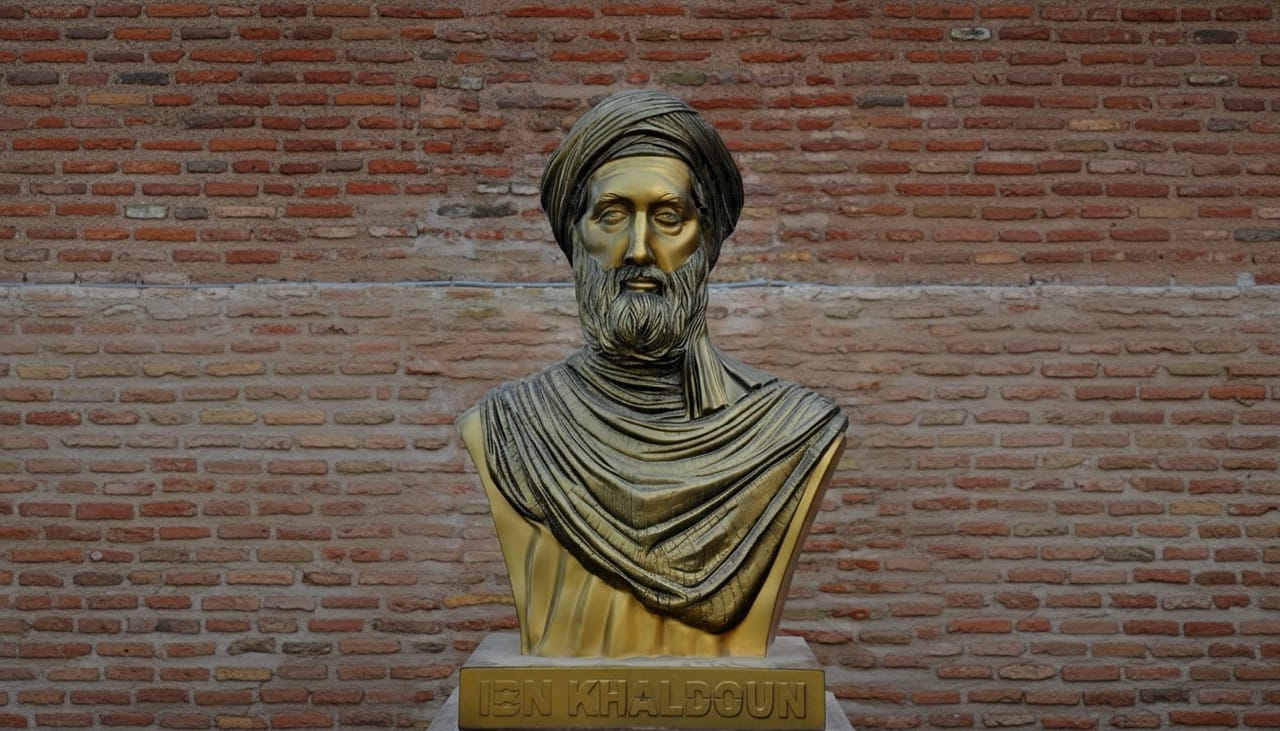
In the 14th century, the visionary scholar Ibn Khaldun authored the Muqaddimah, a groundbreaking work that laid the early foundations for sociology, economics, and historical analysis. Far from being a dry historical relic, his observations offer a dynamic framework for understanding the cyclical nature of human civilization. He recognized that empires and nations are not static entities; they are living organisms that experience a distinct lifecycle of growth, maturation, and inevitable decay.
The Hidden Force Behind the Rise of Nations
At the heart of Ibn Khaldun's theory is the concept of social cohesion. This is the invisible glue that binds a society together, often forged in harsh conditions or through a shared, existential struggle. When a nation's collective solidarity is strong, it possesses the vitality and unified purpose required to innovate, project power, and establish a dominant civilization.
Yet, the very success generated by this fierce social cohesion ultimately sows the seeds of its own destruction. As a civilization transitions from initial struggle to global dominance, the shared hardships that once united its people are gradually replaced by comfort and abundance.
The Anatomy of Civilizational Decline
Ibn Khaldun astutely observed that as subsequent generations inherit the wealth and security built by their predecessors, complacency begins to take root. Luxury breeds individualism, systematically weakening the bonds of collective solidarity. Institutions become bloated, economic burdens increase to fund extravagant societal expectations, and the ruling class grows increasingly disconnected from the realities of the broader populace.
Understanding this natural transition from vigorous growth to stagnant decay provides a remarkable lens through which we can evaluate the current state of global powers. It forces us to ask critical questions about the modern world: Are the prominent nations of the West exhibiting the classic symptoms of late-stage civilizational decline? And conversely, where can we identify the intense social cohesion that signals the rise of tomorrow's superpowers?
Deciphering Today's Geopolitical Landscape
Applying the principles of the Muqaddimah to the 21st century reveals startling parallels. The escalating tensions between the United States, Russia, China, and the broader global stage are not merely isolated political disputes. They are the physical manifestations of the deep civilizational cycles Ibn Khaldun documented.
By analyzing which nations are currently in their ascendant phase and which are grappling with internal fragmentation, we can begin to anticipate the future of international relations. The shifting global order is not random; it is governed by historical currents that dictate the rise and fall of empires, the inevitable challenges to the status quo, and the potential for societal renewal amidst perceived ruin. Grasping these ancient insights is no longer just an academic exercise—it is an essential tool for navigating the reality of our changing world.
Want to dive deeper into Ibn Khaldun's philosophy and uncover the hidden cycles shaping our geopolitical future?
Join "PhiloCrux" community.
Unlock high-density masterclasses and investigations into ideas surviving outside the algorithmic consensus. Support independent thought and get full access to our digital library.
Join Now