Have you ever stopped to consider why you take the exact same route to work every day? Or why certain neighborhoods make you feel anxious, while others naturally encourage you to linger and relax? We like to believe that how we navigate our cities is a matter of pure personal choice, but a deeper, invisible architecture is constantly at play, guiding our footsteps, shaping our moods, and ultimately dictating our behavior.
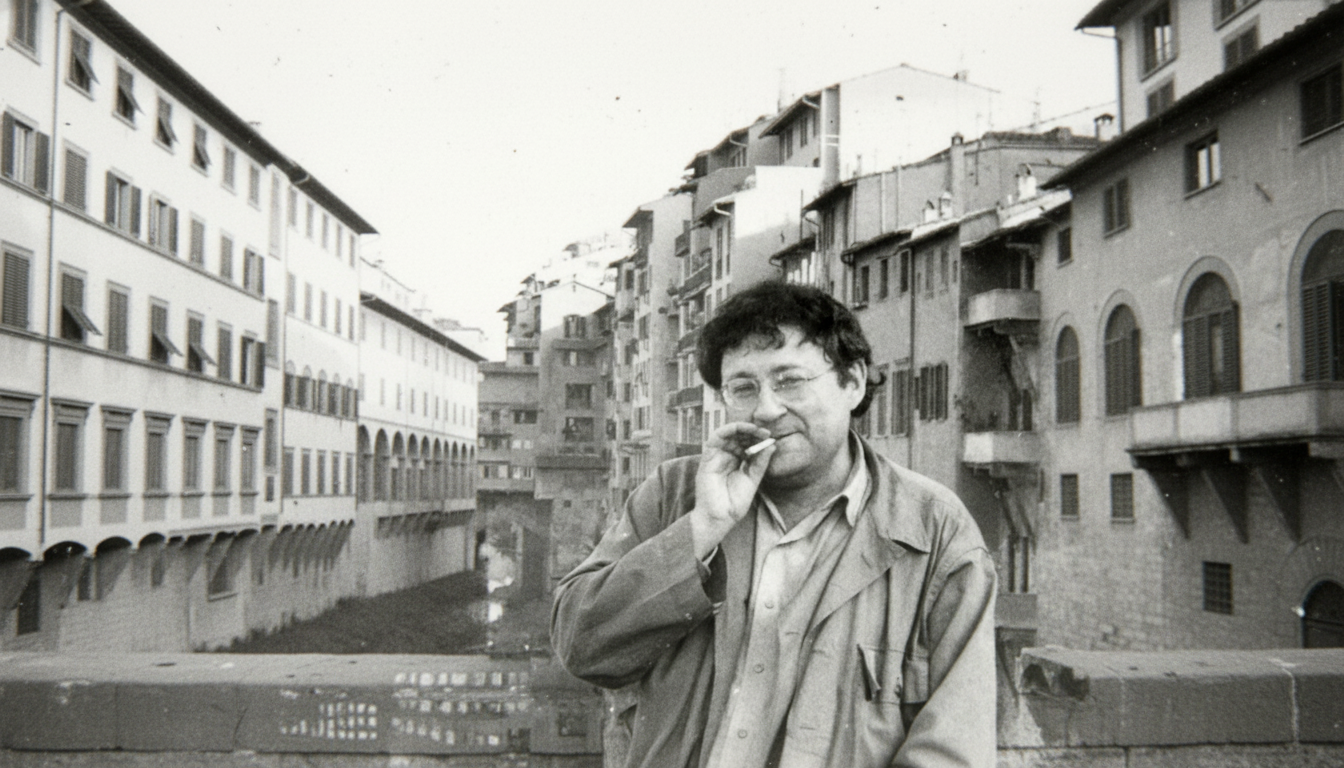
This is the hidden power of the urban landscape—a concept deeply explored by the influential French philosopher and theorist, Guy Debord.
Through his groundbreaking theory of psychogeography, Debord challenged the modern assumption that cities are merely passive backdrops to our lives. Instead, he argued that the physical environment is heavily weaponized by the social order, designed to keep us moving in predictable, consumer-driven loops.
The Invisible Architecture of Daily Life
Psychogeography is fundamentally the study of how our physical environment impacts our psychological states and everyday behavior. When you look at a city map, you see streets, parks, and buildings. But through a psychogeographical lens, you begin to see a web of psychological currents.
City planners, corporations, and social structures design urban spaces with specific intentions. The placement of a shopping district, the width of a sidewalk, the intentional lack of public seating—these are not random architectural accidents. They are deliberate choices that corral human energy, discourage spontaneous gathering, and direct our attention toward commerce rather than community. We are subtly pushed away from authentic exploration and pulled into routine.
Escaping the Society of the Spectacle
To understand why our cities are built this way, we must look at another of Debord’s revolutionary concepts: the Society of the Spectacle. Debord warned that modern life has been hijacked by representations, images, and passive consumption. We no longer directly experience life; we consume curated versions of it.
Our cities are the ultimate physical manifestation of this spectacle. They are designed for efficiency and visual consumption, stripping away our natural instinct for adventure and unpredictability. By recognizing these invisible boundaries, we can begin to question the social order that built them. How do we break the trance of the modern metropolis? How do we reclaim our autonomy and rewrite our relationship with the spaces we inhabit?
Reclaiming Your Urban Experience
Understanding psychogeography is the first step toward urban liberation. It invites a radical shift in mindset. Instead of simply commuting through a concrete grid, you become an active explorer of your environment. You learn to decode the psychological effects of your surroundings, noticing how a specific avenue makes you feel rushed, or how an illuminated billboard commands your subconscious attention.
By uncovering the hidden forces controlling urban living, you can begin to navigate your world on your own terms. The city transforms from a rigid set of rules into an open canvas for genuine human experience, inviting you to wander, question, and ultimately, reclaim the spaces you call home.
Want to dive deeper into Guy Debord's philosophy and uncover the invisible forces shaping your daily life?
Join "PhiloCrux" community.
Unlock high-density masterclasses and investigations into ideas surviving outside the algorithmic consensus. Support independent thought and get full access to our digital library.
Join Now