The Wellness Prison: Foucault and the Biopower of Self-Optimization
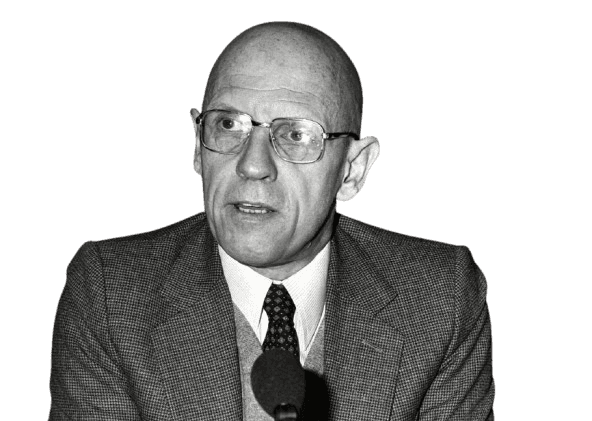
Your smartwatch vibrates, a gentle haptic nudge reminding you to breathe, to stand, or to close your rings. You likely view this as an act of digital benevolence—a tool for your own self-improvement. But in the corridors of PhiloCrux, we must ask a more invasive question: For whom is this optimization intended? When the metrics of your heart rate, sleep quality, and cortisol levels become the currency of your professional value, 'care' ceases to be a private virtue and becomes a mechanism of governance. We are living in the ultimate realization of Michel Foucault’s biopower, where the state and the market no longer need to threaten us with the sword; they simply manage our vitality until we are nothing more than efficient biological processors.
The Evolution of Control: From the Scaffold to the Sensor
To understand our current predicament, we must revisit Foucault’s transition from sovereign power to biopower. In the classical age, power was the right to 'take life or let live.' It was spectacular, bloody, and external. However, as the industrial and modern eras emerged, power underwent a sophisticated mutation. It became the power to 'foster life or disallow it to the point of death.' This is biopower: a technology of power that manages the population as a biological resource.
Today, this management has moved from the hospital and the asylum directly into our pockets. The modern wellness regime represents the ultimate evolution of biopower: a system where the prisoner is not only his own guard but also his own enthusiastic personal trainer. We no longer require a visible overseer because we have internalized the gaze. We quantify our own exhaustion, not to seek rest, but to calculate how much more we can endure before the machinery of production breaks us.
Anatomopolitics and the Quantified Self
Foucault identified two primary poles of biopower. The first is the 'anatomopolitics of the human body,' which focuses on discipline, optimization, and the extraction of utility. In the corporate world, this manifests as the 'wellness-productivity regime.' Consider the following ways your biology is being disciplined under the guise of self-care:
- Corporate Mindfulness: Rather than addressing the systemic causes of workplace burnout, mindfulness is deployed as a psychological lubricant to help the employee tolerate increasingly extractive environments.
- The Quantified Self: Wearable technology transforms the subjective experience of living into a stream of objective data points, allowing for a minute-by-minute micro-management of the biological machine.
- Sleep Optimization: When we track our REM cycles, we are rarely seeking the luxury of dreams; we are ensuring that our 'off-time' is efficient enough to support our 'on-time.'
The Biopolitics of the Achievement Society
The second pole of biopower is 'biopolitics,' which deals with the regulation of the population. In our current era, this has shifted toward a societal mandate for health. Health is no longer the absence of disease; it is the presence of maximum performative capacity. If you are not 'well,' you are not just sick; you are a malfunctioning asset. In the achievement society, we have transitioned from being subjects of a sovereign to being the entrepreneurs of our own exploitation, where every 'rest' is merely a recalibration for future output.
The ‘right’ to life, to one’s body, to health, to happiness, to the satisfaction of needs... was the political response to all these new procedures of power.
— Michel Foucault
By framing productivity as 'wellness' and compliance as 'self-care,' the regime bypasses our natural resistance. We do not revolt against a system that promises us a longer life and a more focused mind. Yet, we must ask what we are doing with that extra time and focus. If every minute gained through bio-hacking is immediately surrendered to the demands of the digital economy, then we have not achieved health; we have merely perfected our own domestication.
If you enjoyed this deep dive, consider supporting our work.
Join Philocrux community.
Unlock high-density masterclasses and investigations into ideas surviving outside the algorithmic consensus. Support independent thought and get full access to our digital library.
Join NowReclaiming the Unoptimized Life
Foucault’s work serves as a warning that the most effective form of power is that which we do not perceive as power at all. When we identify our own desires with the requirements of the system—when we truly want to be the most productive versions of ourselves—the circle of control is complete. To resist the wellness-productivity regime is to embrace the unquantified, the inefficient, and the intentionally idle. It is to recognize that your value is not a derivative of your biological data.
The path to true autonomy requires a radical skepticism of 'care' that demands metrics in return. We must learn to breathe without a prompt and to live without the constant shadow of the dashboard. This investigation is only the beginning of our descent into the mechanics of modern control. To access the full masterclass on escaping the biopolitics of the 21st century, you must go deeper.