The Glass Cage: Byung-Chul Han and the End of the Private Soul
We live in an age that worships at the altar of the visible. The contemporary mandate is clear: to exist is to be perceivable, and to be perceivable is to be transparent. We are told that transparency is the bedrock of democracy, the enemy of corruption, and the gateway to authentic human connection. Yet, as the walls of our private lives dissolve into the digital ether, we find ourselves not liberated, but profoundly exhausted. Byung-Chul Han, perhaps the most surgical critic of our digital condition, suggests that this drive toward total exposure is not a triumph of freedom, but a new and devastating form of violence.
The Pornography of the Visible
Han posits that the transparency society is essentially a pornographic society. This is not necessarily a comment on sexual content, but on the status of the image. In a world where everything must be exhibited to have value, things lose their 'aura,' their mystery, and their depth. They become flat, smooth, and immediately consumable. When we share every meal, every fleeting emotion, and every intimate moment, we strip reality of its protective layers.
This obsession with 'the smooth'—the lack of resistance in communication—is what Han calls the 'positivity' of our age. We have eliminated the 'negativity' of the hidden, the secret, and the complex. In the transparency society, beauty is reduced to the smooth, a surface without resistance that allows for the frictionless flow of information and capital. Without the shadow, the light becomes blinding rather than illuminating.
From External Discipline to Internal Self-Exploitation
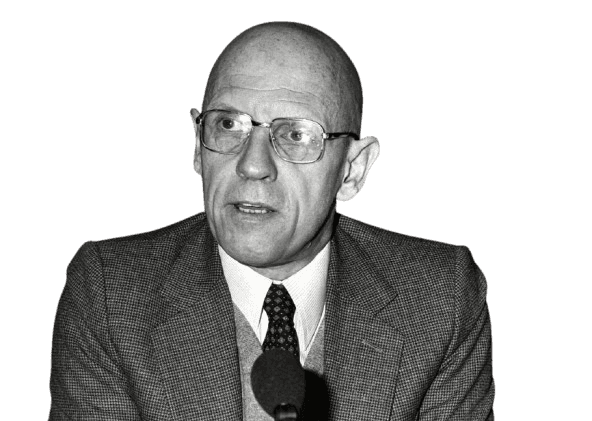
The genius of Han’s analysis lies in his evolution of Michel Foucault’s theories of power. While Foucault described the 'disciplinary society' of the 19th and 20th centuries—a world of hospitals, prisons, and factories where bodies were coerced from the outside—Han argues we have entered the 'achievement society.' In this new paradigm, the whip has been internalized.
We are no longer 'subjects' of a sovereign power; we are 'projects' of our own making. We do not need a Big Brother to watch us because we voluntarily broadcast our lives to the world. We have become the entrepreneurs of our own selves, constantly optimizing, sharing, and performing. The modern individual is not suppressed by an external dictator but is driven to exhaustion by the internal mandate to be perpetually visible and productive. This is the birth of the 'burnout society,' where the pressure to achieve and the pressure to appear become indistinguishable.
- The Voluntary Panopticon: Unlike Bentham’s prison, where inmates were watched against their will, we willingly inhabit a digital panopticon, providing the data used to enslave us.
- The Loss of the Secret: Transparency demands the elimination of the private sphere, making genuine contemplation and the development of a 'self' impossible.
- The Tyranny of the Like: Communication is stripped of its dialectical nature, becoming a mere exchange of affirmations that prevents true critical thinking.
If you enjoyed this deep dive, consider supporting our work.
Join PhiloCrux community.
Unlock high-density masterclasses and investigations into ideas surviving outside the algorithmic consensus. Support independent thought and get full access to our digital library.
Join NowThe Exhaustion of the Digital Soul
Why does this constant exposure feel so draining? Han argues that the soul requires 'distance' and 'shame' to function. Shame is a protective mechanism for the ego; transparency destroys it. When we are forced to be transparent, we are forced to be 'porous,' losing the boundaries that define who we are. The result is a profound sense of emptiness. We are connected to everyone, yet we have never been more alone in our fatigue.
Transparency is a neoliberal device. It is a forceful turning-inward, which takes on the form of self-exploitation. It is the violence of the transparent.
— Byung-Chul Han
To reclaim our humanity, we must rediscover the power of the hidden and the dignity of the non-transparent. True freedom is not the ability to show everything, but the right to remain a mystery, both to the world and to ourselves. As we continue our investigation into the philosophical underpinnings of the digital age, we must ask: at what point does the light of transparency become a fire that consumes the self?
This investigation into the mechanics of digital exhaustion is only the beginning. In our full masterclass, we dive deeper into Han's strategies for resistance and the 'pedagogy of seeing' required to survive the age of total visibility. Join PhiloCrux to unlock the full architecture of the forbidden thought.