The Twilight of the Idols and the Cult of the Average
We live in the era of the manager, the bureaucrat, and the consensus-builder. Look across the geopolitical landscape of the modern West, and one is struck by a profound, suffocating absence: there are no great men. There are only committees, algorithms, focus groups, and the ceaseless, churning theater of electoral politics. We are governed by individuals who do not lead, but merely ride the turbulent currents of public opinion, terrified of the very masses they ostensibly command.
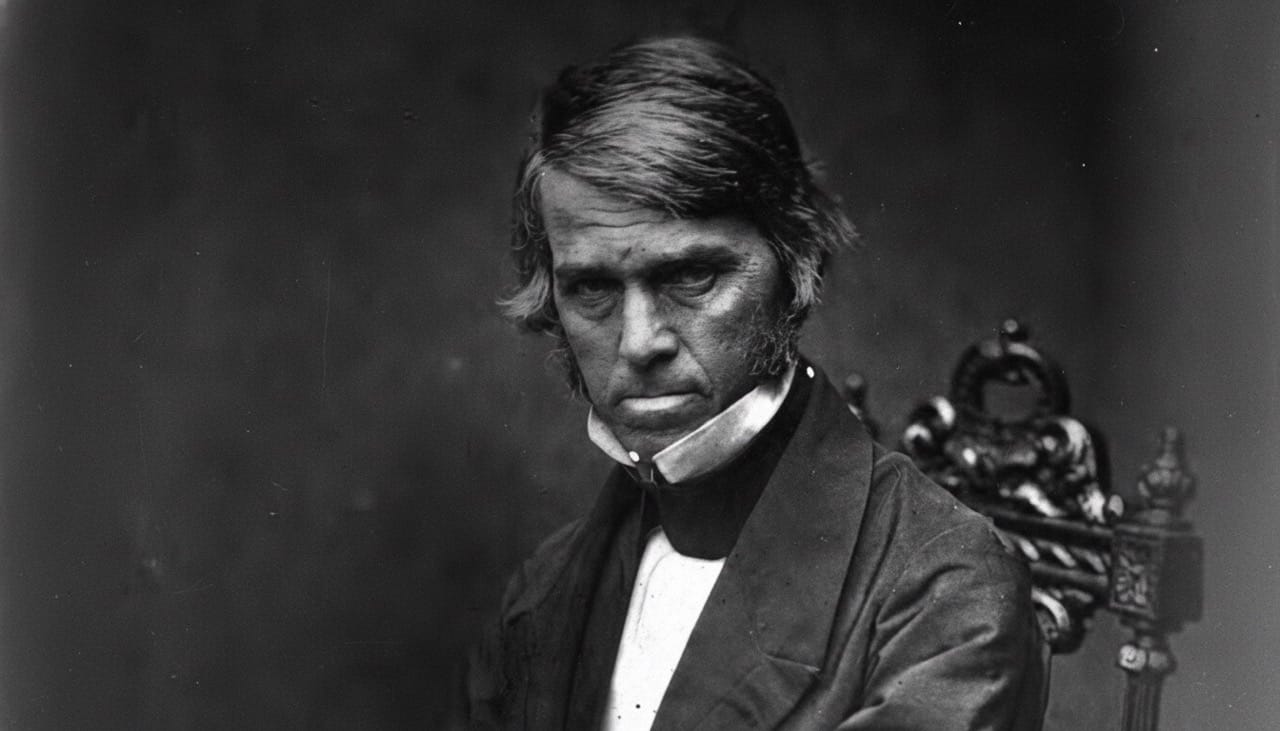
In this landscape of managed decline, democracy has achieved its ultimate, terminal form. It is no longer a mechanism for discovering the best leaders; it is a sprawling, entropic machine designed to ensure that no one of true, disruptive greatness can ever wield power. As the Victorian prophet Thomas Carlyle famously declared, democracy is "the despair of finding heroes to govern us."
For over a century, we have been fed the Whig history of the world: a comforting, linear narrative in which humanity steadily marches away from the dark ages of kings and conquerors toward the sunlit uplands of egalitarianism and universal suffrage. We are taught that the "Great Man" is a myth, a dangerous relic of a less enlightened time, and that history is actually driven by structural forces, mass movements, and democratic consensus.
But as the gears of the democratic machine begin to grind and shatter under the weight of their own contradictions—as our institutions decay and our societies fracture—a radical intellectual excavation is underway. Deep in the subterranean networks of dissident thought, particularly within Neoreaction (NRx) and the philosophy of sovereign exit, Carlyle’s ghost has been summoned.
His seminal work, On Heroes, Hero-Worship, and the Heroic in History, is not merely a piece of 19th-century literature. It is the foundational anti-democratic text. It is the forbidden blueprint that exposes universal suffrage for what it truly is: the enthronement of the average, the institutionalization of mediocrity, and a mathematical absurdity that attempts to aggregate ignorance into wisdom.
The Sage of Chelsea: Unearthing the Victorian Prophet
To understand the sheer explosive force of Thomas Carlyle, one must first understand the era that forged him. Born in 1795 in Scotland, Carlyle lived through the crucible of the Industrial Revolution and the terrifying aftershocks of the French Revolution. He watched as Britain transformed from an agrarian society into an industrial leviathan. He witnessed the rise of the Chartist movement, the expansion of the voting franchise, and the birth of mass politics.
Masterclass Material
While his contemporaries—liberals like John Stuart Mill—looked upon the expanding democratic franchise with cautious optimism, Carlyle looked upon it with apocalyptic dread. From his study in Chelsea, London, he wrote with the fury of an Old Testament prophet. His prose was not the measured, polite discourse of the Enlightenment; it was a thunderstorm of Germanic syntax, biblical wrath, and searing irony.
Carlyle saw the modernizing world attempting to replace the soul of man with the logic of the machine. He despised the emerging capitalist ethos of laissez-faire, which he famously derided as the "Cash Payment nexus," just as fiercely as he despised the democratic ballot box. To Carlyle, the universe was fundamentally hierarchical, mystical, and ordered by divine inequality.
In 1840, he delivered a series of six lectures that would become On Heroes, Hero-Worship, and the Heroic in History. In it, he systematically dismantled the egalitarian premise. He argued that all of human history—every civilization, every religion, every great leap forward—was not the result of collective action or material conditions, but the direct result of "Great Men."
"Universal History, the history of what man has accomplished in this world, is at bottom the History of the Great Men who have worked here. They were the leaders of men, these great ones; the modellers, patterns, and in a wide sense creators, of whatsoever the general mass of men contrived to do or to attain."
Today, Carlyle has been largely erased from the modern university curriculum. When he is mentioned, he is swiftly dismissed as a proto-fascist, a crank, or a reactionary dinosaur. This erasure is not accidental; it is a defense mechanism. The modern academic cathedral cannot tolerate Carlyle because his thesis strikes at the absolute foundational dogma of the post-war world: the unquestioned moral supremacy of equality.
If Carlyle is right—if human progress requires the submission of the mediocre many to the exceptional few—then the entire architecture of modern liberal democracy is not an apex of civilization, but a tragic, temporary deviation from the natural order.
Continue reading this briefing
You've reached the members-only portion of this 17 min read essay. Become a PhiloCrux member to finish it — and unlock the full archive of 25+ deep-dive masterclass and private audio briefing.
Already a member? Sign in