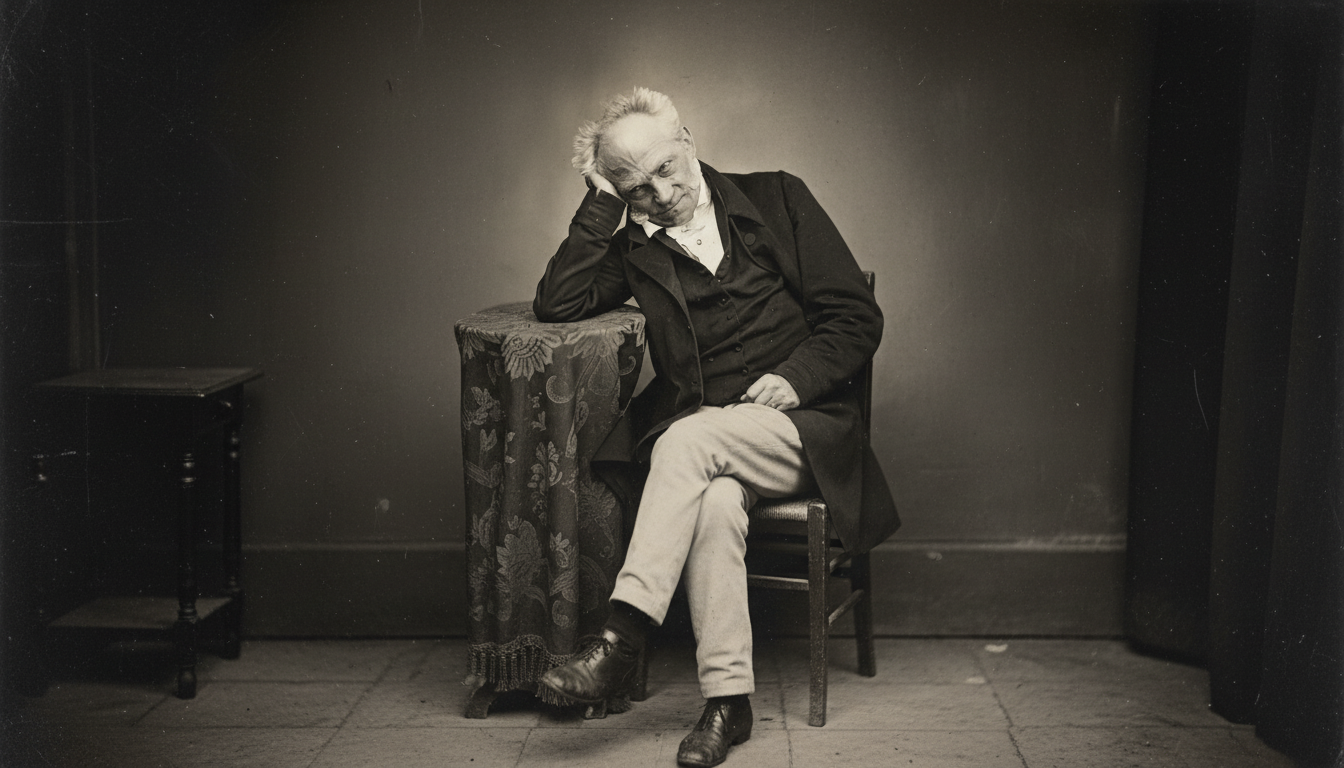
Arthur Schopenhauer is widely remembered as history’s great philosophical pessimist, a thinker who believed that human existence is driven by an irrational, restless force he called the "Will." Yet, beyond his grand metaphysical theories lies an area of his work that has sparked fierce debate for over a century: his writings on gender, love, and relationships. His views on women remain some of the most highly contested and polarizing texts in 19th-century philosophy.
The Roots of a 19th-Century Controversy
During a time when romanticism idealized courtship and companionship, Schopenhauer took a jarringly different approach. He sought to strip away the sentimental illusions of his era, looking at human attraction, marriage, and societal roles through a sharply critical, almost clinical lens. By analyzing the underlying motivations of men and women, he proposed theories regarding power dynamics, intellect, and biological imperatives that fundamentally challenged the conventional morality and polite society of his day.
Intellect, Love, and Power Dynamics
To accurately interpret Schopenhauer’s stance, one must look past the initial shock value of his essays. He possessed a unique, albeit deeply controversial, perspective on how the sexes interact. He frequently argued that nature equipped men and women with vastly different psychological tools to achieve the same ultimate goal: the survival and continuation of the species.
This framework led him to formulate provocative arguments about female psychology, the institution of matrimony, and what he perceived as the inherent friction in male-female relationships. But were his observations purely rooted in the personal and societal biases of his time, or was he attempting to expose uncomfortable, enduring truths about human nature?
Finding Consensus in the Modern Era
Engaging with controversial historical texts is a vital exercise in philosophical and critical thinking. By thoroughly dissecting Schopenhauer’s arguments, modern readers can better trace the evolution of gender roles and understand the historical roots of contemporary relationship psychology.
Evaluating his unfiltered opinions allows us to separate any underlying philosophical merit from the deep-seated prejudices of the 1800s. Ultimately, grappling with these challenging, often uncomfortable perspectives equips us with a sharper understanding of how historical philosophies continue to shape the way we view love, companionship, and interpersonal dynamics today.
Ready to unpack the most controversial minds of history and explore the hidden forces shaping modern relationships?
Join "PhiloCrux" community.
Unlock high-density masterclasses and investigations into ideas surviving outside the algorithmic consensus. Support independent thought and get full access to our digital library.
Join Now