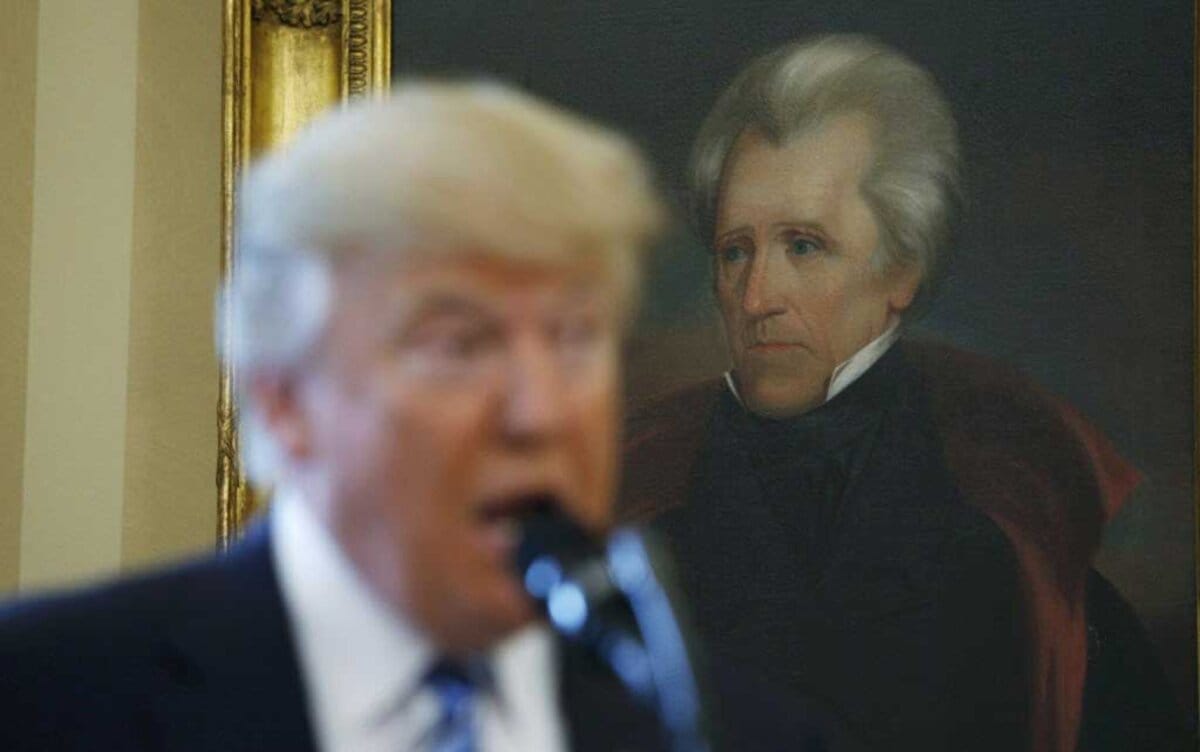
History rarely repeats itself exactly, but it frequently rhymes. When examining the broad landscape of American politics, few historical echoes are as profound—or as polarizing—as the parallels between the seventh and the forty-fifth presidents. Separated by nearly two centuries, a radically transformed global economy, and the advent of the digital age, a 19th-century frontier general and a 21st-century billionaire reality TV star might seem to have nothing in common. Yet, beneath the surface of their vastly different eras lies a shared political blueprint.
Both figures rose to the highest office in the land by tapping into a powerful, enduring current in the American electorate: populism. By positioning themselves as outsiders stepping in to dismantle a corrupt establishment, they harnessed the anxieties and desires of citizens who felt left behind by the political elite.
The Anatomy of an Anti-Establishment Movement
To understand the political phenomenon surrounding these leaders, one must first look at the conditions that allowed their movements to thrive. True populism relies on a distinct dividing line between "the pure people" and "the corrupt elite."
In the 1820s, the American electorate was expanding. Property requirements for voting were being dropped across various states, enfranchising a new class of working men and frontier settlers. These citizens harbored deep suspicions of the wealthy merchant class and the political dynasties of the East Coast. Fast forward to the 21st century, and a similar sentiment brewed among working-class voters facing deindustrialization, economic stagnation, and a pervasive distrust of Washington insiders and mainstream media institutions.
In both instances, a charismatic figure stepped into the void. They did not just campaign on policy; they campaigned on an identity. They promised to be a wrecking ball to the establishment, giving voice to a forgotten demographic and vowing to return power directly to the people.
War on the Institutional Elite
The most striking similarity between these two presidencies is how they governed once in power. Neither man shed their outsider persona upon entering the White House; instead, they weaponized it against the very institutions of government.
For the 19th-century president, the ultimate symbol of elite corruption was the Second Bank of the United States. He viewed it as a tool for the wealthy to exploit the common man and waged a relentless, unprecedented executive war to destroy it, famously defying Congress and even the Supreme Court to achieve his nationalist agenda.
Centuries later, modern populism found its target in what was termed the "Deep State"—a perceived network of entrenched bureaucrats, intelligence agencies, and globalist organizations. The strategy remained remarkably consistent: circumvent traditional political norms, communicate directly with the base, and frame every institutional pushback as proof of a rigged system.
Demagogues or Champions of Democracy?
The legacy of a populist leader is inherently complicated. Because their political strategy requires intense polarization, they are simultaneously viewed as saviors by their supporters and existential threats by their detractors.
Both leaders possessed larger-than-life, highly controversial personalities. They demanded intense personal loyalty, relied heavily on nationalist rhetoric, and were entirely unapologetic about their disruptive tactics. This raises a timeless philosophical question about the nature of a democratic republic: Does the abrasive dismantling of political norms ultimately democratize power, or does it dangerously erode the guardrails that keep a republic stable?
By studying the shared strategies, rhetorical styles, and lasting impacts of these two men, we gain an invaluable lens through which to view modern political shifts. Their intersecting legacies force us to examine not just the leaders themselves, but the underlying psychology of the American voter. Understanding this historical rhyme is essential for making sense of the societal currents that continue to shape the nation's future.
Want to dive deeper into American political history and uncover the hidden forces shaping our democracy?
Join "PhiloCrux" community.
Unlock high-density masterclasses and investigations into ideas surviving outside the algorithmic consensus. Support independent thought and get full access to our digital library.
Join Now