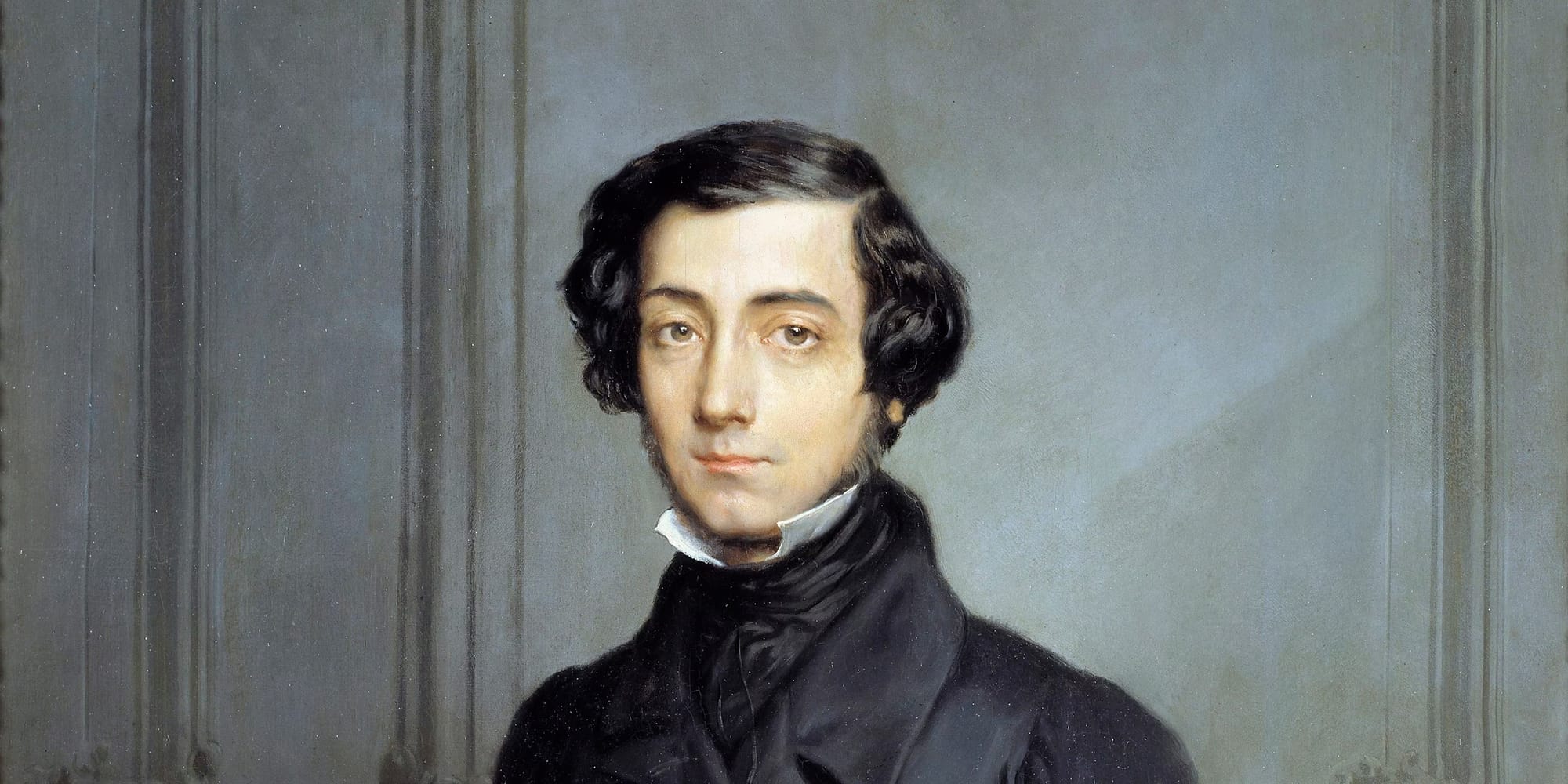
In the mid-19th century, a French aristocrat crossed the Atlantic not to find a new world, but to witness the future of the old one. Alexis de Tocqueville did not fear the chaos of the masses; he feared their consensus. He looked past the vibrant energy of early American town squares and saw a specter that would eventually haunt the digital age: the Tyranny of the Majority. This was not the tyranny of the bayonet, but the tyranny of the quiet nod, the social shunning, and the slow erosion of the individual mind under the crushing weight of public opinion.
The Architecture of Soft Despotism
Tocqueville’s most profound realization was that democracy, while solving the problem of the monarch, introduced a more insidious form of control. In an aristocracy, the king might control the body, but the soul remained free to rebel in secret. In a democracy, however, the majority possesses a power that is both physical and moral. It acts upon the will as much as upon the actions and represses not only all resistance, but all controversy.
This 'soft despotism' does not break wills; it softens them, bends them, and guides them. It creates a society where the individual feels small, insignificant, and ultimately, wrong if they stand apart from the collective. The most terrifying form of censorship is not the state silencing the citizen, but the citizen silencing themselves to remain within the safety of the digital herd.
From Social Pressure to Algorithmic Enforcement
If Tocqueville were to walk through the digital corridors of the 21st century, he would recognize our social media platforms not as forums of debate, but as automated engines of his greatest fear. The 'Majority' is no longer a organic collection of human perspectives; it is a simulated consensus manufactured by code. The algorithmic enforcement of thought functions as a modern-day ostracism, where the 'unacceptable' opinion is not debated, but simply erased from the timeline.
- The Feedback Loop: Algorithms prioritize content that mirrors the existing biases of the majority, effectively burying the heterodox thinker under a mountain of performative agreement.
- The Digital Panopticon: The fear of being 'canceled' or downvoted into oblivion acts as a psychological barrier, preventing the birth of truly original thought before it can even be articulated.
- The Illusion of Choice: While we feel we are choosing our tribes, we are often being funneled into pre-existing ideological silos that demand total conformity as the price of admission.
I know of no country in which there is so little independence of mind and real freedom of discussion as in America.
— Alexis de Tocqueville
The Death of the Intellectual Outlier
The danger of the Dictatorship of the Majority is the eventual homogenization of the human spirit. When the cost of dissent becomes social and economic death, only the bravest—or the most desperate—will speak. In our current era, this is exacerbated by the fact that the 'majority' can be faked by bots, amplified by corporate interests, and enforced by invisible moderators. When the algorithm becomes the arbiter of truth, the 'majority' is no longer a collection of human wills but a curated feedback loop designed to flatten the soul.
We have traded the visible chains of the past for the invisible threads of the present. The result is a landscape where everyone speaks with the same voice, yet no one is truly heard. The independence of mind that Tocqueville championed is being traded for the convenience of belonging to a digital consensus that cares nothing for the truth.
Join "PhiloCrux" community.
Unlock high-density masterclasses and investigations into ideas surviving outside the algorithmic consensus. Support independent thought and get full access to our digital library.
Reclaiming the Individual Mind
To resist the Dictatorship of the Majority is to accept a life of intellectual friction. It requires a conscious decision to step outside the algorithmic stream and seek the difficult, the unpolished, and the forbidden. We must cultivate a 'sanctuary of the mind' where the roar of the crowd cannot penetrate, and where ideas are judged by their depth rather than their popularity. The future belongs not to those who shout with the loudest mob, but to those who have the courage to remain silent until they have found their own voice. This investigation is only the beginning of our descent into the mechanisms of control. To access the full architectural map of modern dissent, the path forward is through the inner sanctum.