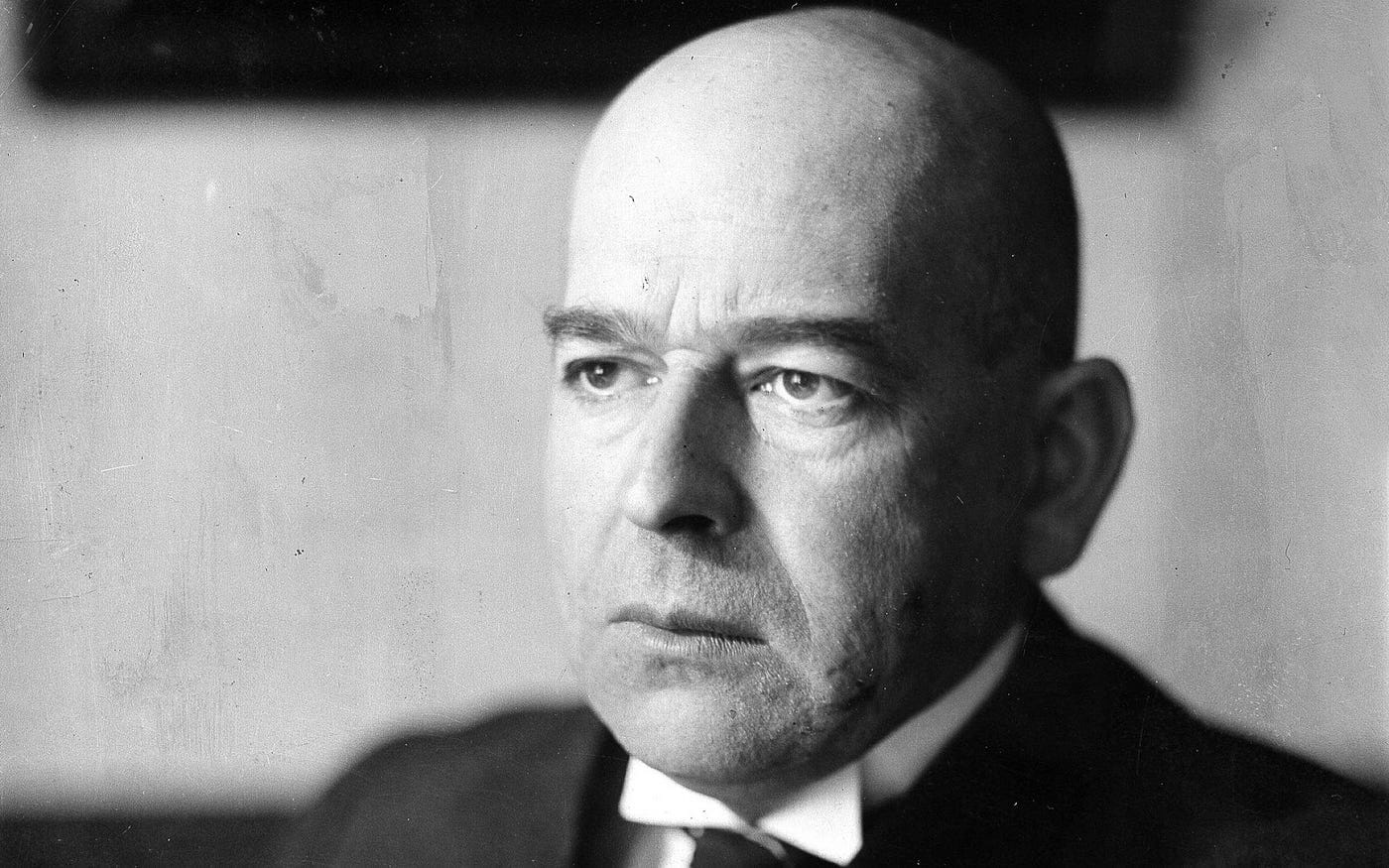
Most of us view history as a steady, upward march—a continuous timeline of technological, moral, and social progress. But what if history does not move in a straight line? What if, instead, human societies function exactly like living, breathing organisms, complete with a predetermined lifespan and an inevitable expiration date?
German historian and philosopher Oswald Spengler presented this radical framework in his monumental and controversial work, The Decline of the West. Rejecting the traditional view of infinite human progress, Spengler offered a profound lens through which we can analyze the rise and fall of great empires.
The Biological Lifecycle of Society
Spengler argued that civilizations do not simply evolve indefinitely. Instead, they experience a predictable biological lifecycle: birth, growth, maturity, and decay. The critical turning point in this historical lifecycle is the transition from what he called "Culture" to "Civilization."
In Spengler’s vocabulary, a Culture represents the vibrant, deeply creative, and spiritually unified youth of a society. It is a period of inward growth, religious fervor, and artistic innovation. However, as the society ages and exhausts its creative soul, it hardens into a Civilization. This final phase is characterized by rigid mechanization, pure rationality, and materialism. For Spengler, reaching the "Civilization" stage was not an achievement, but rather a terminal diagnosis—the beginning of the end.
Symptoms of Societal Winter
How do we know when a society has crossed the threshold into its final phase? Spengler identified several recurring symptoms that appear when a culture enters its civilizational "winter."
These symptoms include the rise of sprawling megacities and mass society, where individuals become disconnected from their spiritual and geographic roots. He noted the absolute dominance of money, where financial systems dictate the values of the culture. Furthermore, as original artistic and philosophical creativity wanes, the dying civilization turns its focus outward. Unable to generate new inner meaning, it becomes obsessed with empire-building, external power, and the complex management of its massive populations.
Decoding the Modern World Through Spengler's Eyes
Reading Spengler today is a profoundly unsettling experience. Although he formulated his theories a century ago, his diagnosis of the West as having entered its terminal phase feels highly relevant to contemporary debates. When we observe the modern global landscape—dominated by hyper-urbanization, extreme economic focus, and institutional stagnation—it is difficult not to see the exact patterns he predicted.
Understanding Spengler's perspective does not require us to surrender to historical pessimism. Rather, it offers a powerful analytical framework for interpreting the complex, often chaotic shifts occurring in our current era. By recognizing the historical season our society might be in, we gain a sharper, more sober understanding of the challenges of the modern world and our place within the broader cycle of human history.
Unpack the profound theories of Oswald Spengler and explore the hidden forces shaping human history by joining our community today.
Join "PhiloCrux" community.
Unlock high-density masterclasses and investigations into ideas surviving outside the algorithmic consensus. Support independent thought and get full access to our digital library.
Join Now