The Phantom in the Ballot Box
There is a foundational myth upon which the entirety of the modern democratic project rests: the myth of the rational, deliberative citizen. We are taught to envision the democratic process as an grand, ongoing seminar. In this idealized public square, individuals weigh competing policies, analyze empirical data, and cast their ballots based on a sober calculus of enlightened self-interest and moral duty.
Yet, any honest observer of contemporary politics—watching the visceral tribalism of political rallies, the digital lynch mobs swarming across social media, or the hypnotic sway of populist demagogues—must eventually confront a chilling realization. The seminar is an illusion. The public square is not a laboratory of reason; it is a theater of primal emotion.
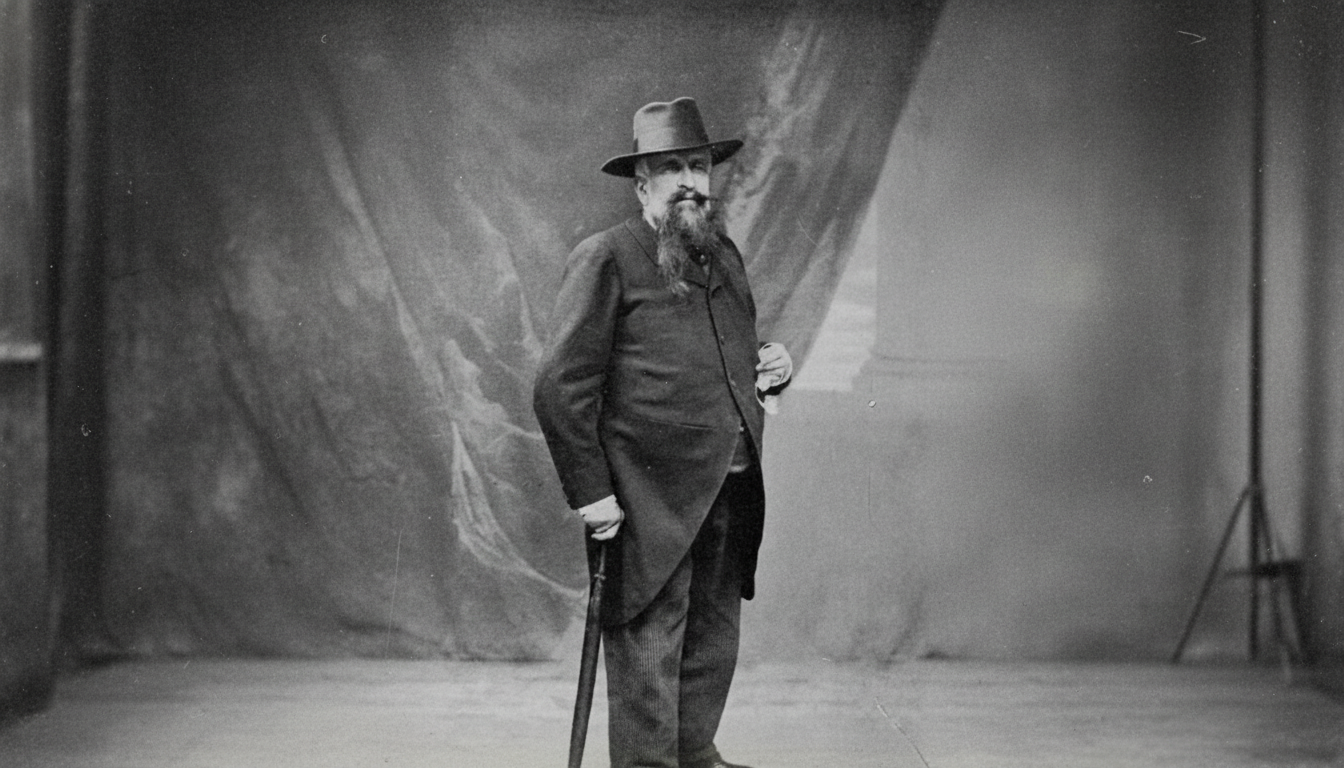
To understand the widening chasm between democratic theory and democratic reality, we must dust off a text that has been simultaneously revered, reviled, and quietly utilized by the architects of mass persuasion for over a century: Gustave Le Bon’s 1895 masterpiece, The Crowd: A Study of the Popular Mind.
Le Bon proposed a radical, deeply unsettling premise. He argued that the moment humans gather in a mass, they cease to be individuals. They regress. They merge into a single psychological entity driven by unconscious urges, susceptible to contagion, and fiercely governed by the historical sediment of their cultural and biological lineage—what Le Bon controversially termed the "instinct of the race." In Le Bon’s terrifyingly prescient view, modern democracy is not the triumph of collective reason; it is the institutionalization of mob rule by ancestral instinct.
To grapple with Le Bon is to gaze into the dark, beating heart of mass society. It forces us to ask whether our cherished political institutions are merely fragile dams built across a raging river of human irrationality.
The Aristocrat of the Mind in an Age of Tumult
To comprehend the sheer force of Le Bon’s cynicism, one must understand the crucible in which his worldview was forged. Gustave Le Bon was a French polymath—trained as a physician, deeply engaged in anthropology, sociology, and physics—living through one of the most volatile periods in European history.
He was born in 1841, a child of the post-Revolutionary tremors that shook France throughout the 19th century. He witnessed the Franco-Prussian War, the collapse of the Second Empire, and, most traumatically, the Paris Commune of 1871. During the Commune, Le Bon watched as the streets of Paris were swallowed by revolutionary fervor, mob violence, and the fiery destruction of cultural monuments.
He observed a profound historical pivot: the era of kings, aristocracies, and ecclesiastical authority was dead. The 20th century, he prophesied, would be "the ERA OF CROWDS." The divine right of kings had been replaced by the divine right of the masses.
However, Le Bon did not view this transition with the romantic optimism of Enlightenment philosophers like Rousseau, who believed in the innate nobility of the "General Will." Drawing heavily on the emerging sciences of hypnosis and unconscious psychology (anticipating Freud, who would later write extensively on Le Bon), he viewed the crowd as a psychological regression. Mass society, fueled by the industrial revolution, urbanization, and the advent of mass media, had created the perfect conditions for the dissolution of the individual intellect.
Le Bon’s work became the secret playbook for the 20th century. It was read obsessively by figures as disparate as Theodore Roosevelt, Winston Churchill, Sigmund Freud, and, tragically, Benito Mussolini and Adolf Hitler. It is the ultimate user manual for the manipulation of the masses, a text that strips away the polite fictions of civic life to reveal the raw machinery of power.
Continue reading this briefing
You've reached the members-only portion of this 16 min read essay. Become a PhiloCrux member to finish it — and unlock the full archive of 25+ deep-dive masterclass and private audio briefing.
Already a member? Sign in