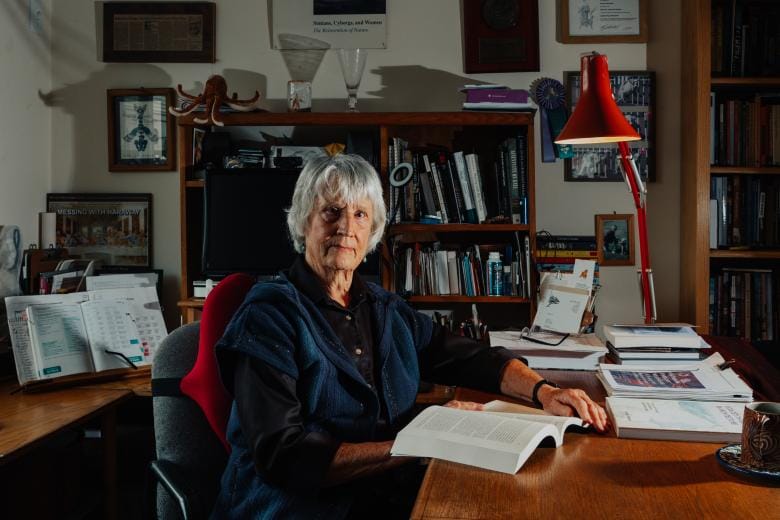
We are no longer simply using technology; we are fundamentally intertwined with it. From the smartphones that act as a permanent extension of our memories to the algorithms that shape our daily decisions, the boundary separating human and machine has never been more porous. Long before social media and wearable technology dominated our lives, philosopher and scholar Donna Haraway saw this fusion approaching. In her groundbreaking work, A Cyborg Manifesto, she proposed a radical new framework for understanding the evolving relationship between humanity, technology, and feminism.
Beyond Science Fiction
When we hear the word "cyborg," popular culture often brings to mind dystopian futures, mechanical supersoldiers, or rogue artificial intelligence. However, Haraway’s interpretation is far more nuanced and deeply embedded in our present reality. A cyborg, in this philosophical context, is a hybrid of machine and organism. It represents a complete rejection of rigid boundaries—between human and animal, physical and non-physical, natural and artificial. By embracing this hybrid identity, we can begin to dismantle the binary thinking that has historically restricted human potential and societal growth.
The Intersection of Technology and Feminism
One of the most profound aspects of Haraway's manifesto is its direct application to feminist theory. Traditional societal frameworks often rely on essentialist ideas of what it means to belong to a certain gender, tying identity inextricably to biology. The cyborg metaphor disrupts this entirely. It suggests a post-gender reality where identities are fluid, constructed, and adaptable. This intersection—often referred to as technofeminism—offers a powerful lens for exploring how technological advancement can be harnessed to challenge patriarchal structures rather than simply reinforcing them.
Embracing Situated Knowledges
Understanding our place in a hyper-connected, technocentric world requires a fundamental shift in how we perceive truth and information. Haraway introduces the concept of "situated knowledges," challenging the traditional idea of an absolute, objective scientific truth that exists independently of the human experience. Instead, she argues that all knowledge is shaped by the specific perspective of the observer. Recognizing how our viewpoints are situated within complex webs of power, culture, and digital infrastructure is essential for navigating the modern world. Grasping this concept allows us to see how technological tools can be utilized to uplift marginalized voices and foster genuine understanding.
Building an Equitable Posthuman Society
As we hurtle toward a posthuman era, the ethical implications of our merging with machines cannot be ignored. The cyborg concept is not inherently utopian; it carries the distinct risk of deepening existing inequalities if the future is driven solely by corporate or militaristic interests. The true challenge lies in steering this technological evolution toward social justice. By critically examining our relationship with technology through Haraway's visionary philosophical framework, we are better equipped to actively participate in designing a future that honors both our humanity and our vast technological capabilities.
Ready to dive deeper into Haraway's philosophy and uncover the hidden forces shaping our digital future?
Join "PhiloCrux" community.
Unlock high-density masterclasses and investigations into ideas surviving outside the algorithmic consensus. Support independent thought and get full access to our digital library.
Join Now