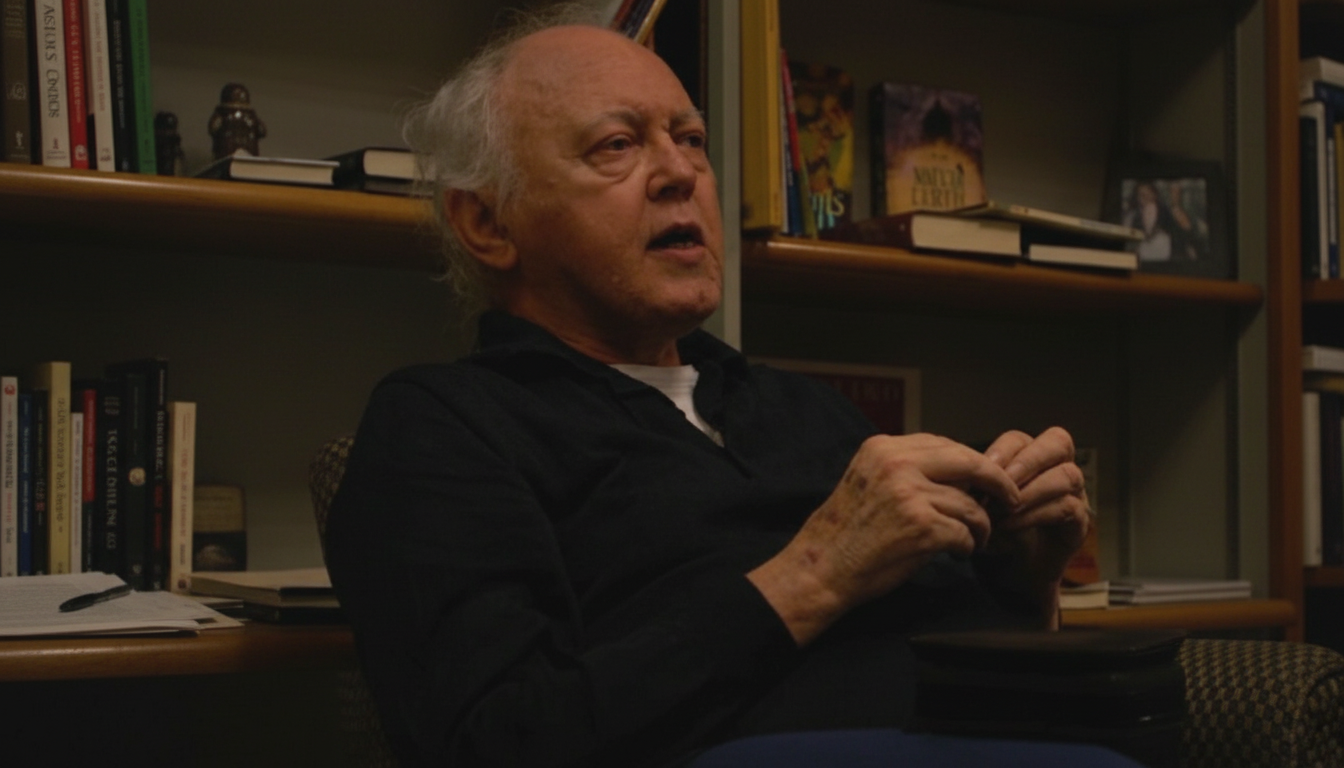
The Scent of Decay in the Garden of the End of History
To speak of corruption in the modern era is almost always to speak in the shallowest of terms. We imagine briefcases of unmarked bills passed beneath mahogany tables, politicians whispering into the ears of corporate lobbyists, or the systemic embezzlement of public funds. We treat corruption as a mere legal or moral failing—a glitch in the otherwise rational machinery of liberal democracy and global capitalism. But what if corruption is not a glitch? What if it is the operating system itself?
To understand corruption not as a peripheral crime, but as a profound ontological decay, we must turn to one of the most brilliant, marginalized, and fiercely independent thinkers of the late 20th and early 21st centuries: the Italian philosopher Costanzo Preve (1943–2013). Preve understood that true corruption—tracing its etymology to the Latin corrumpere, meaning "to break completely" or "to destroy"—is the systematic dismantling of the human essence. It is the dissolution of the social bonds, historical continuity, and philosophical truth that elevate the human animal into a political and ethical being.
We are living in an era defined by a spiritual and structural rot so pervasive that it has become invisible. We inhabit a world where every human relation is aggressively commodified, where historical memory is erased in favor of an eternal, consumerist present, and where the very political forces that once promised emancipation have become the most zealous defenders of the status quo.
To confront this malaise, we must engage in a rigorous dialectical analysis of our current epoch. We must explore the totalizing corruption of global capitalism (the Thesis), the tragic corruption and capitulation of the political Left (the Antithesis), and finally, the profound philosophical refoundation required to reclaim our humanity (the Synthesis). Preve’s intellectual framework provides the ultimate map for navigating this wasteland. It is a journey that requires us to abandon comforting illusions, discard obsolete political labels, and confront the dialectic of corruption head-on.
The Heretic of Turin: Costanzo Preve’s Intellectual Odyssey
Before we can plunge into the depths of his philosophy, we must understand the man who forged it. Costanzo Preve was not an armchair academic dealing in safe, sterilized abstractions. He was an intellectual brawler, a polymath, and ultimately, a heretic.
Born in Valenza, Italy, in 1943, Preve’s intellectual appetite led him across Europe. He studied in Paris under the towering figures of French structuralism and Marxism, in Berlin where he immersed himself in German idealism, and in Athens, where he developed a lifelong, profound reverence for classical Greek philosophy. This pan-European triangulation—the revolutionary fervor of Paris, the rigorous dialectics of Berlin, and the foundational ontology of Athens—became the crucible of his thought.
For decades, Preve was a committed militant and intellectual within the Italian communist milieu. He was a prominent figure in the Italian Communist Party (PCI) and later in various extra-parliamentary leftist groups. However, as the 1980s bled into the 1990s, and the Soviet Union collapsed, Preve observed a horrifying metamorphosis. He watched as his comrades abandoned the rigorous critique of capitalism, trading the struggle for the working class for the shallow comforts of liberal individualism, identity politics, and globalist integration.
Preve refused to follow the herd. Instead of abandoning Marx, he decided to rescue him from the Marxists. He argued that orthodox Marxism had degenerated into a deterministic, economic pseudo-science—a positivist religion that betrayed Marx’s true philosophical core. To save the emancipatory project, Preve initiated a radical synthesis. He fused Marx’s critique of capitalism with G.W.F. Hegel’s concept of Sittlichkeit (ethical community) and Aristotle’s definition of man as a zoon politikon (political animal).
Because of his relentless critique of the modern Left, his willingness to dialogue with thinkers across the political spectrum (including the European New Right), and his total rejection of political correctness, Preve was systematically ostracized. He was excommunicated from the academic and political circles he once helped build. Yet, in his isolation in Turin, he produced his most vital work, diagnosing the terminal illness of the modern world. He became a philosopher of the ruins, charting a course toward a new renaissance of human solidarity.
This is a premium post. Subscribe to unlock the full video and the complete analysis.
Continue reading this briefing
You've reached the members-only portion of this 15 min read essay. Become a PhiloCrux member to finish it — and unlock the full archive of 25+ deep-dive masterclass and private audio briefing.
Already a member? Sign in